
When a yacht turns dull, feels chalky or develops scratches and cracks, the easiest mistake is to start by asking which wax to buy—or whether the whole boat needs repainting. Begin with two simpler questions: are you looking at gelcoat or a later paint finish, and is the problem only at the surface or through the surface layer?
This guide focuses on above-water GRP/FRP topsides and superstructures. Below-water osmosis, aluminium, steel and major structural damage require different inspections.
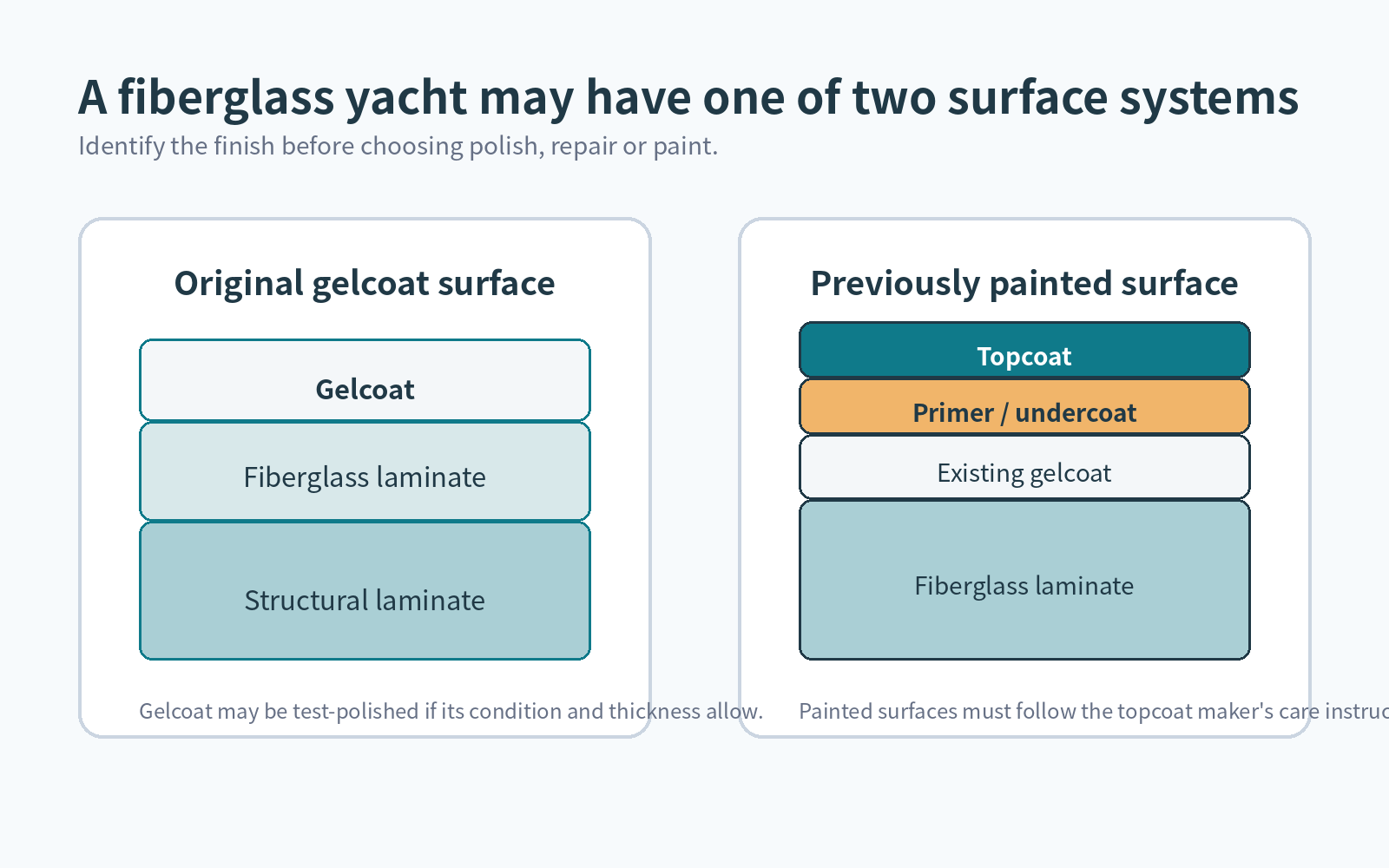
The three options in plain language
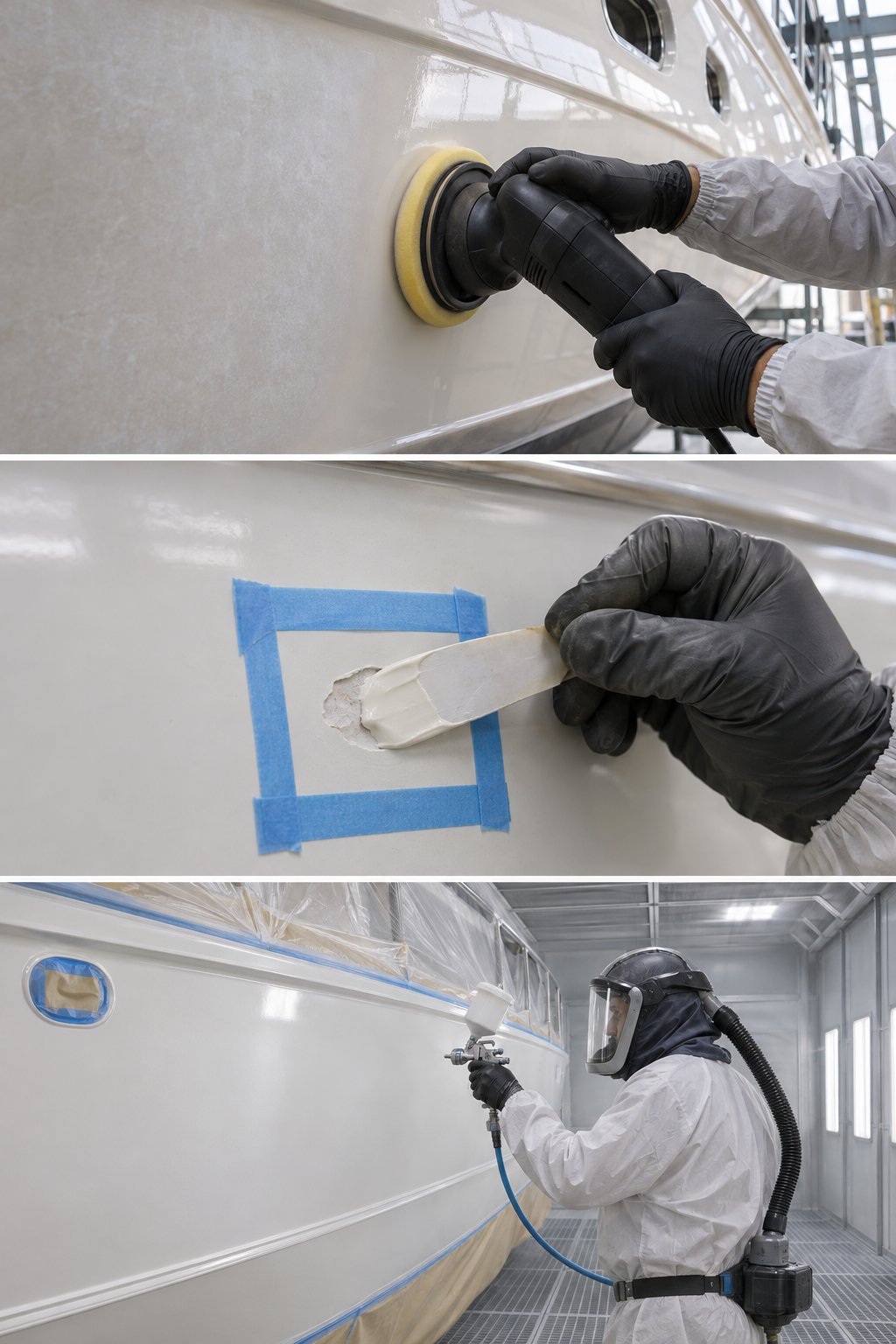
- Polishing levels a very thin oxidised surface so sound gelcoat can shine again. It does not replace missing material or repair a crack.
- Local gelcoat repair rebuilds a local chip, deeper scratch or small void before levelling, colour-matching and polishing. It is for local surface damage, not a shortcut for every crack.
- Repainting creates a new coating system over a properly repaired and prepared surface when the old finish is widely aged, brittle, peeling or no longer suitable.
Interlux’s fiberglass guidance describes gelcoat as the protective outer surface over the fiberglass laminate. UV and the marine environment can fade it; polishing and protection may delay deterioration, but the surface cannot be abraded indefinitely.
First: is the surface gelcoat or paint?
Many production fiberglass yachts leave the mould with gelcoat as their finished outer layer. Older yachts may later have been repainted, leaving a system of topcoat, primer and the original gelcoat below. Both can look glossy, so colour alone is not proof.
Check yard records, invoices or the applicator before using an abrasive. Paint systems have different care limits. For example, Awlgrip’s official care guidance distinguishes between its finishes: some should not be treated with polishing compound, while other repairable finishes may be polished professionally.
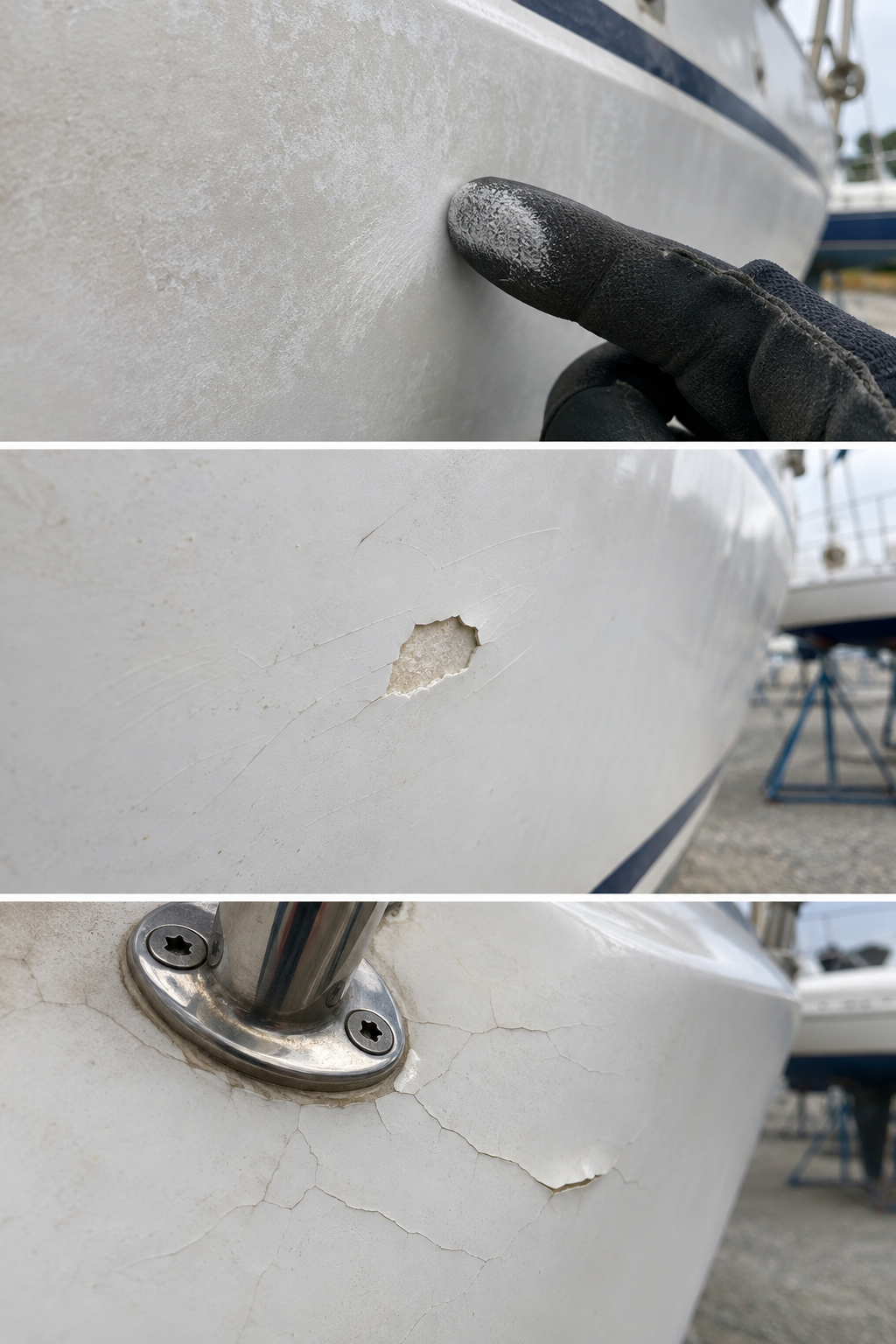
Second: dullness, a chip or a crack?
1. Dull or chalky, but still continuous
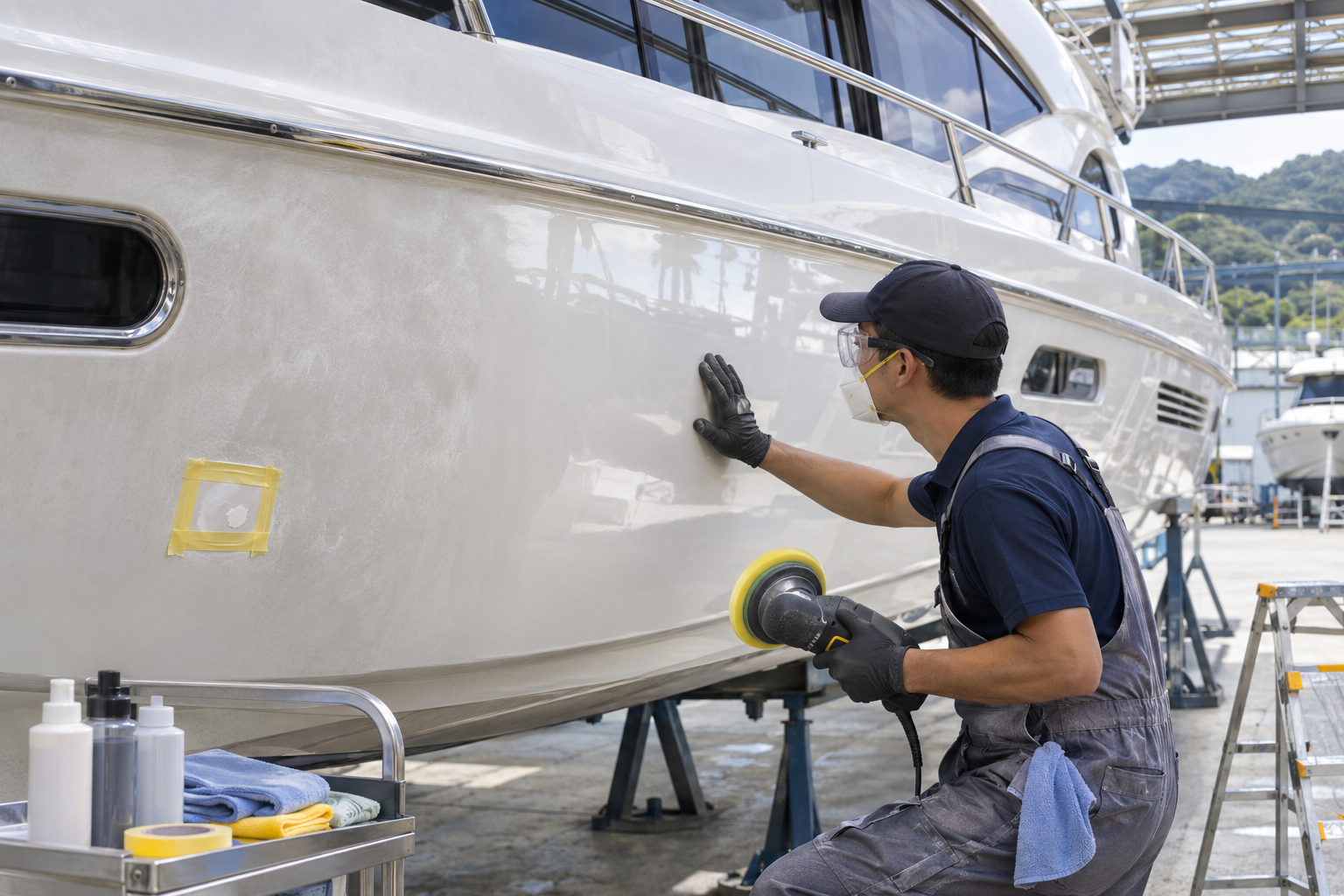
Wash away salt, grease and old wax, allow the surface to dry, then test a small inconspicuous area. For lightly oxidised gelcoat, start with a mild polish. A more aggressive compound is only for deeper oxidation. West Marine’s gelcoat care guide similarly recommends the least aggressive method that works, because every abrasive step removes a small amount of surface.
If a test area returns to even gloss and there is no cracking, peeling or exposed layer, polishing and suitable protection may be more proportionate than a full repaint.
2. A local chip, gouge or deeper scratch
If damage is local, the surrounding finish is stable and there is no soft area, moisture or broad exposed laminate, a technician may consider a local gelcoat repair. The job is more than dabbing on paste: loose edges are removed, colour is matched, the area is filled, cured, levelled and polished. An older faded hull can make an invisible colour match difficult even when the original colour code is known.
Interlux’s small fiberglass repair guidance says large-area damage or anything affecting structure or hull integrity should be assessed professionally. Size is only one factor.
3. Widespread cracks, peeling or a brittle finish
Polishing should not be used merely to create temporary shine. If an old coating is cracking, peeling or separating, unstable material may need removal before fairing, priming and applying a compatible topcoat system. Interlux’s finishing guidance also treats sound coatings differently from cracked, peeling or separated coatings; the latter should not simply be covered by another coat.
A crack is not automatically structural—but appearance alone is not enough
Gelcoat is harder and more brittle than the fiberglass structure below, so fine surface cracks can appear before the laminate fails. Stop cosmetic work and arrange an assessment when:
- cracks follow an impact or radiate from a fitting, window, rail base or other loaded point;
- the surrounding area feels soft, moves or sounds abnormal;
- fibres, moisture, staining, bulges or broad peeling are visible;
- the same location cracks again soon after repair; or
- the affected area is growing or sits in a structurally loaded location.
A technician may need to inspect the back of the panel, sounding response, moisture and the laminate—not just whether the face can be polished.
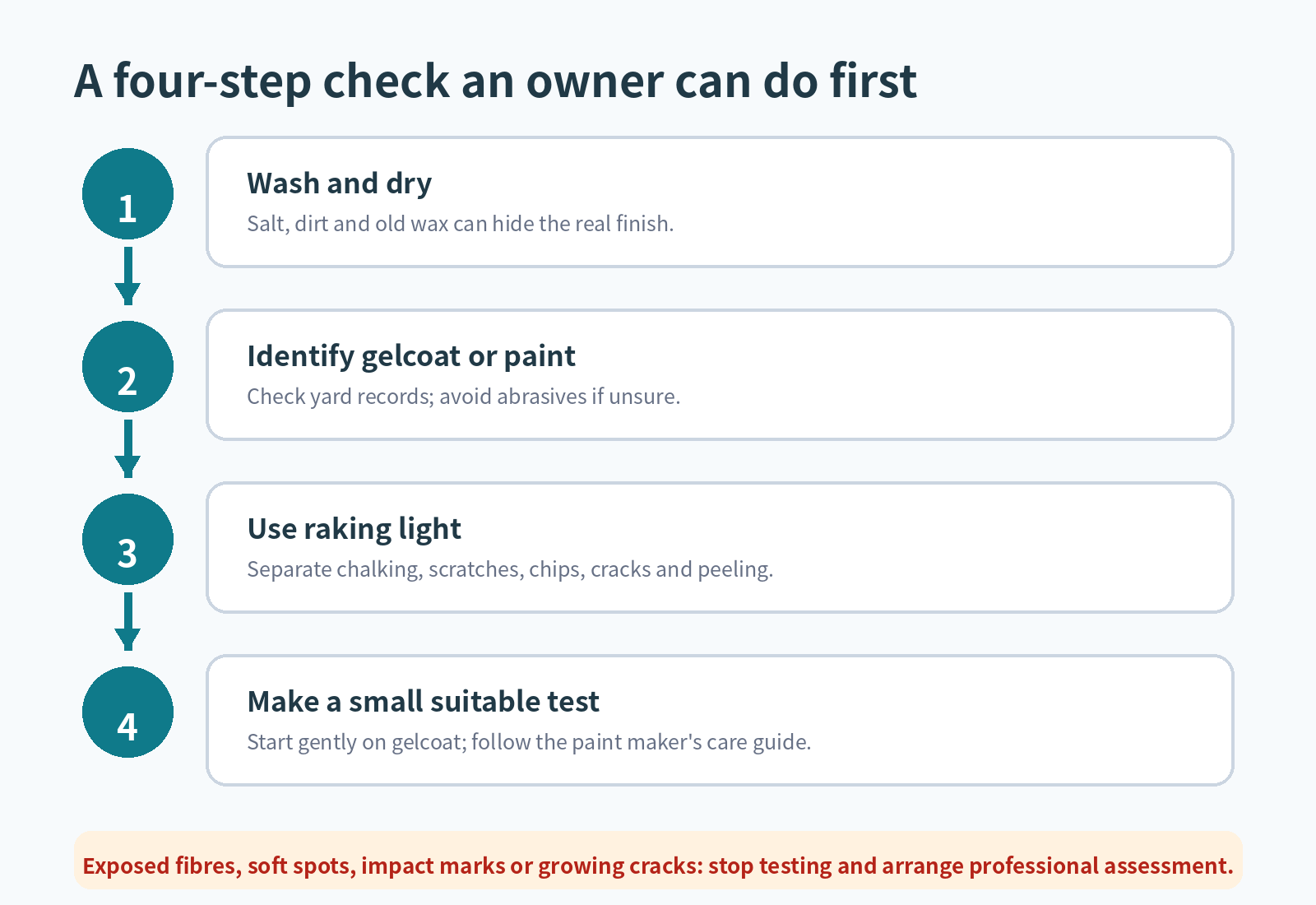
Four checks an owner can do first
- Wash and dry: salt, stains and old wax can disguise the true condition.
- Identify the finish: use maintenance records to distinguish original gelcoat from paint. If unsure, do not begin with an abrasive.
- Inspect with raking light: record whether the problem is even dullness, a scratch, chip, crack or peeling, and photograph the extent.
- Make only a suitable small test: sound gelcoat can start with the mildest method; a painted surface should follow the topcoat maker’s care instructions.
Which treatment is the better starting point?
| What you see | Reasonable starting point | Do not overlook |
|---|---|---|
| Even dullness or light chalking; surface remains continuous | Clean, then test gelcoat restoration from mild to stronger | Confirm it is not a restricted paint finish; over-polishing removes material |
| Local deep scratch, chip or small void | Local compatible gelcoat/surface repair and colour match | Depth, moisture, surrounding stability and colour difference |
| Peeling paint or broadly aged gelcoat | Assess wider preparation, primer and a topcoat system | Preparation quality often matters more than the last colour coat |
| Impact cracks, soft areas, exposed fibres or recurring cracks | Professional damage or structural assessment first | Do not polish over or hide the evidence |
What should a yard quotation state?
Instead of comparing only a price per foot, ask the yard to state the work area, whether the surface is gelcoat or paint, how much unstable material will be removed, whether cracks are being treated cosmetically or structurally, the primer/topcoat system, colour-matching method, work environment and acceptance criteria. Quotations can then be compared on the same scope.
When should you call a technician?
If you cannot identify the finish, or you see impact marks, softness, exposed fibres, moisture, peeling or recurring cracks, arrange an inspection before choosing a cosmetic or repair system. Voy Yachting can help organise photographs, maintenance records, yard inspection and comparable scopes of work. Materials and methods still need to match the actual hull, coating and work location. Visit Voy.hk for more information.
Sources checked 13 November 2026: Interlux—Getting to know your substrates; Interlux—Making small repairs to fiberglass surfaces; Interlux—How do I apply finishes?; Awlgrip—Maintaining an Awlgrip Finish; West Marine—Gelcoat Care and Restoration Guide. General educational information only; it does not replace an on-site coating or structural assessment.