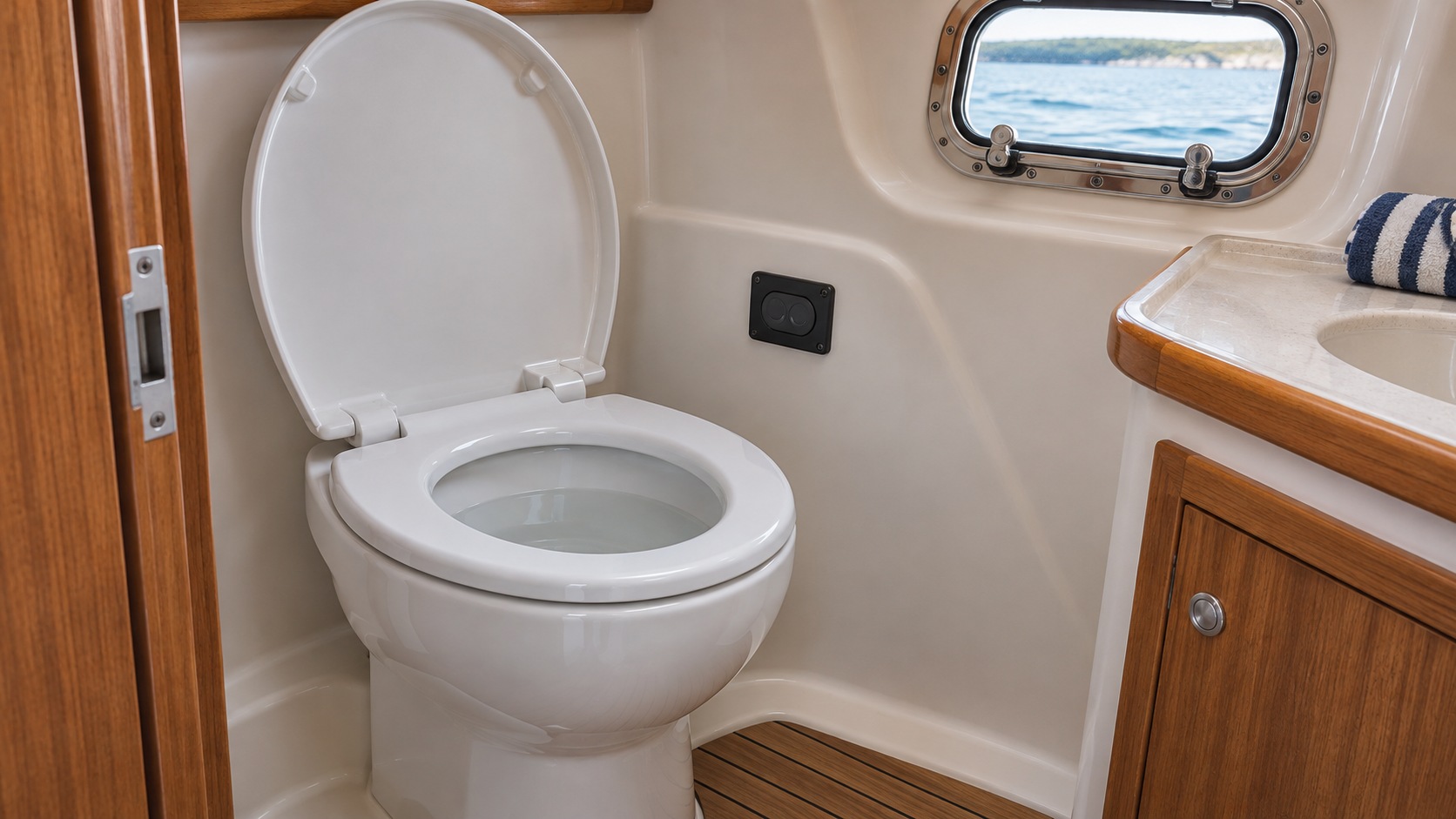

A yacht toilet may have a handle, one button, a panel or a pedal. Identify the control in front of you, then learn that system’s operation. There is no single sequence that fits them all.
We first explain where the waste goes, then cover each control separately. Start with the section that matches your boat. On an unfamiliar yacht, ask the crew to demonstrate the actual controls: the action and completion time vary by model.
Watch: identify your marine toilet controls
English-language video with English subtitles. It explains toilet controls and the separate process of emptying a holding tank. Follow the actual model’s manual and crew demonstration. Watch on YouTube
What does flushing actually do?
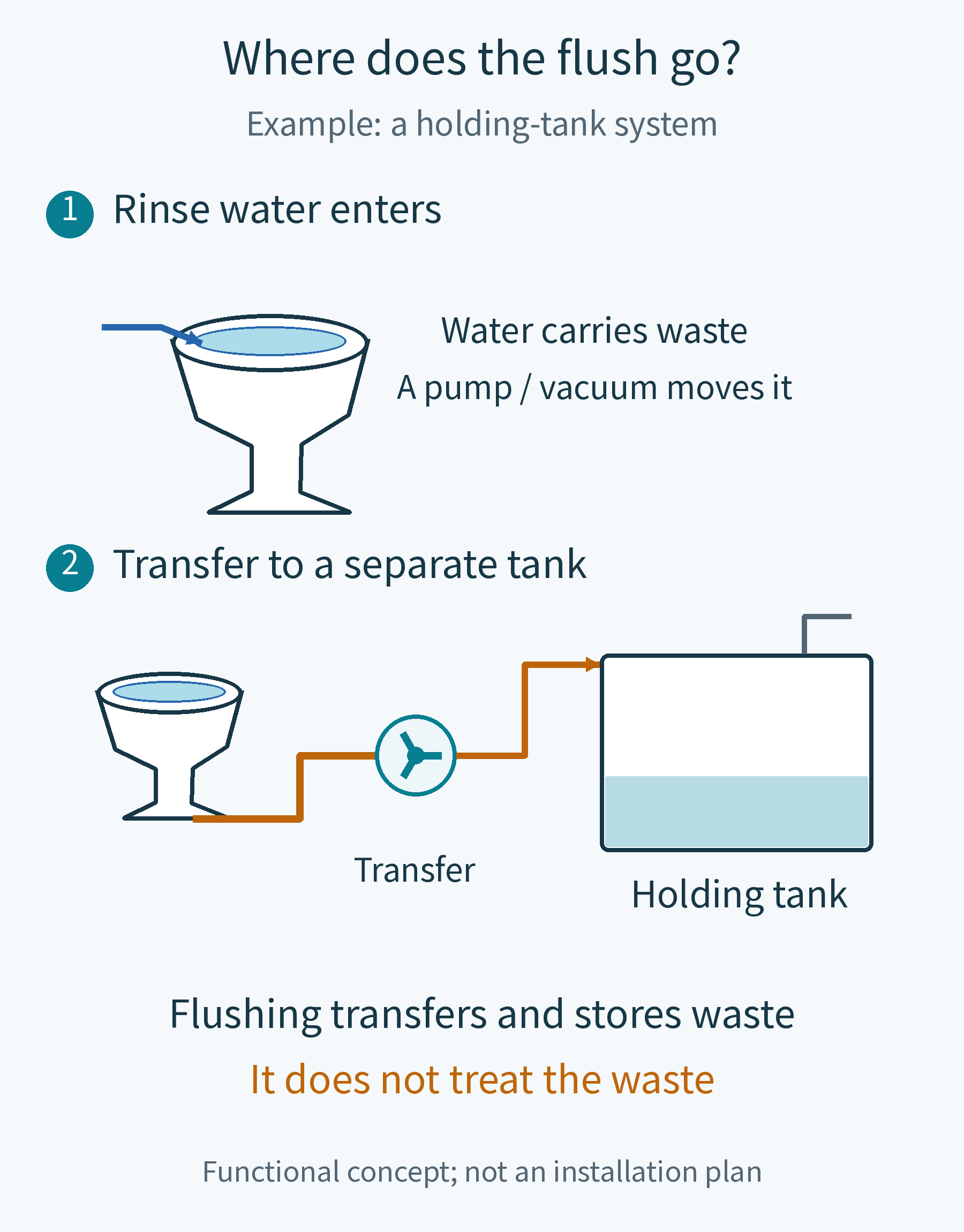
The bowl needs water to carry waste away and a force to move it through the discharge pipe. That force can come from your hand, an electric pump or a vacuum system. Flushing rinses the bowl and transfers its contents. The user may not need to control those jobs separately.
In a holding-tank installation, waste moves from the bowl into onboard storage for subsequent pump-out or disposal arrangements. A clean bowl does not mean an empty tank.
A handle beside the bowl: you do the pumping
A manual toilet usually has a pump handle and a small control lever. The handle supplies the force; the lever selects whether rinse water is admitted. Moving the lever alone does not perform a flush—you still pump.
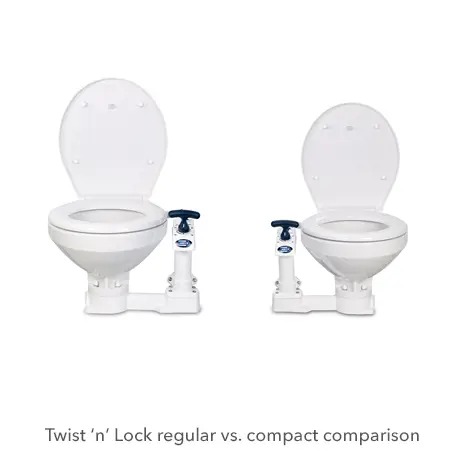
For Jabsco Twist ’n’ Lock, once the crew has confirmed that valves and the system are ready:
- Before use, check for sufficient bowl water. If more is needed, open the flush control and pump water in, then shut the control.
- After use, pump away the bowl contents with the water control shut.
- Rinse the discharge line. Reopen the water control and continue pumping to move waste to storage; finish by shutting the control and pumping the bowl empty.
This model needs several actions because you control both water and pumping. Follow its manual and actual pipe run for pump strokes: an empty bowl does not prove the line is clear. Complete the specified control locking and seacock closure according to the manual and boat’s arrangements. Manufacturer’s operating sequence
Just one flush button: one control does both jobs
Some electric toilets have no separate fill or drain control. On Jabsco 37010, the single flush button runs rinse water and the macerator discharge pump together. Water rinses the bowl while the pump moves waste away. You do not need to find a second button.
A motor takes over part of the manual pumping work. Whether to hold a button or press and release, and when to stop, must come from that model’s instructions or the crew’s demonstration. One-button layouts do not establish identical operation across brands. Jabsco’s single-button model explanation
Several controls: identify flush before the optional functions
Extra controls may adjust bowl water or offer different flush programmes. They are available functions, not a checklist to complete in order. Read the labels and distinguish these two examples.
A model with flush, add-water and drain functions
The older Jabsco Quiet-Flush 37045 has a flush control plus a two-way water-level switch—not necessarily three separate buttons:
- Flush: runs rinse water and the discharge pump together to remove waste.
- Add water: admits water only, when more bowl water is needed.
- Drain: pumps bowl water out, when its level needs reducing.
If bowl water is already suitable, use flush after use; there is no universal requirement to fill, flush and drain in succession. Add water only as needed and instructed. Drain here concerns the bowl, not emptying the holding tank. 37045 control description
E2: eco flush, full flush and empty
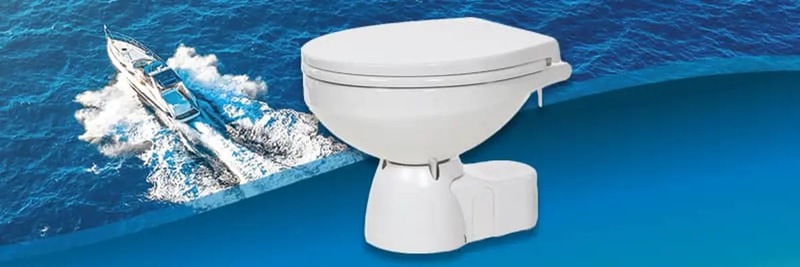
Quiet Flush E2 has a different set. Eco flush and full flush are alternative flush options; empty evacuates bowl liquid. Select the appropriate flush function following the panel instructions. Do not operate all three in sequence or mistake eco flush for a separate fill control.
Three choices can therefore mean different things. Read the labels rather than counting buttons. E2 panel functions
A pedal: first identify the system it operates
A pedal describes the control, not necessarily the mechanism. This example applies specifically to Dometic VacuFlush 5000-series toilets, including 5148.
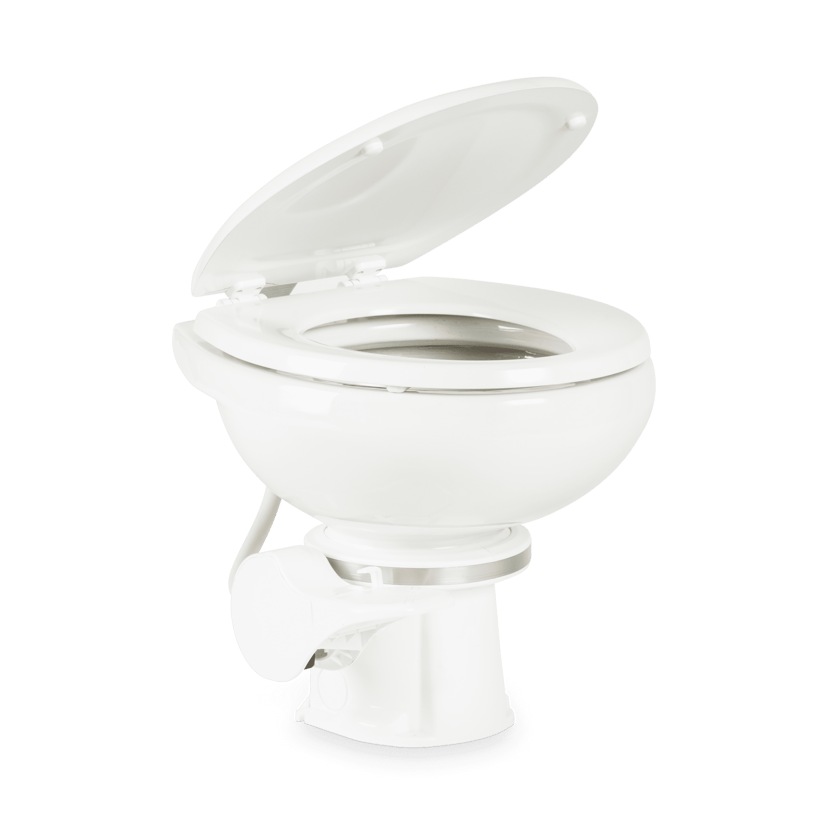
- Lift the pedal gently to add water if needed. Do not keep it raised indefinitely.
- Press down to flush. The valve opens and the vacuum system helps move waste away.
- Release and let the system get ready again. The pedal returns and operating vacuum is restored. Follow any ready-to-flush indicator.
Vacuum here means lower pressure inside the plumbing than outside. Opening the valve lets that pressure difference help move waste. You do not need a separate suction button. A little water remains in this model’s bowl after flushing; that alone is not a reason to keep pressing the pedal. VacuFlush normal operation, page 7
How does sewage finally leave the holding tank?
A holding tank temporarily stores toilet wastewater on board. Flushing sends waste into it; emptying the tank is a separate job. More toilet use adds more wastewater, which needs a separate removal arrangement.
A collection service: from the boat to reception equipment
A boat with a deck pump-out fitting can transfer sewage to a suitable marina facility or collection service. The Bayliner 320 manual, for example, labels its fitting WASTE. Crew must identify the actual boat’s fitting and distinguish it from freshwater and fuel fillers.
Once the service hose is connected, the external pump creates suction, drawing sewage through the pipework and deck fitting into reception equipment. The service then handles it through its collection and disposal arrangements. Tank level falls; repeatedly pressing the toilet flush control does not empty it. The illustration shows this transfer:
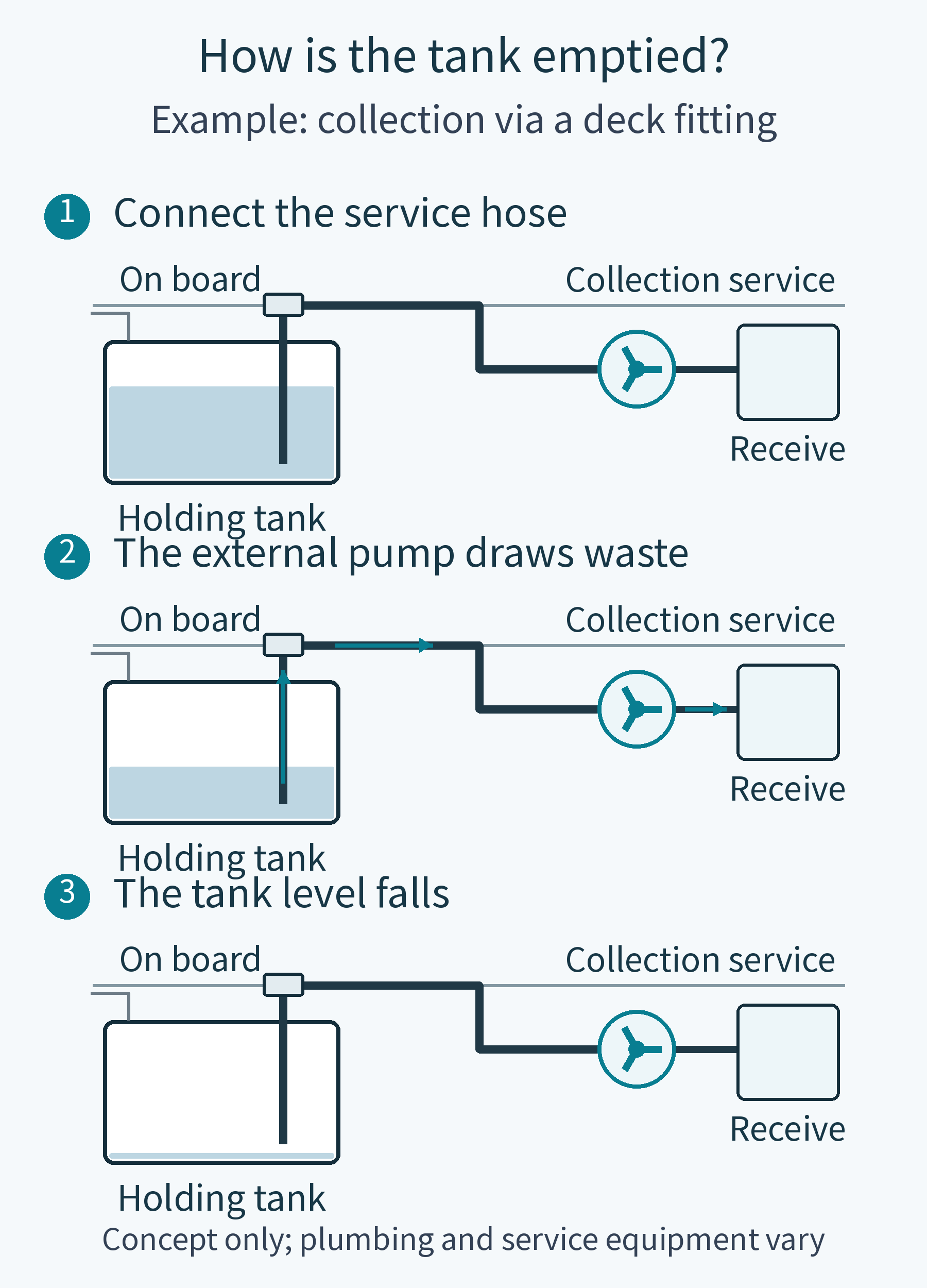
Trained personnel follow the boat and facility instructions for connection, ventilation, stopping suction and securing the fitting. Any tank rinsing follows the manual and service arrangements. The vent admits and releases air; it is not the normal sewage outlet. Bayliner 320 owner’s manual, pages 55–57; Dometic DHT-L holding tank manual, pages 12–14.
What about a separate onboard discharge pump?
Some boats also have a holding-tank discharge pump and an overboard outlet. The pump transfers sewage through discharge pipework and a seacock—a valve controlling an opening through the hull. This has a different job from the toilet’s flush or bowl-drain control. Not every boat has it, and it cannot simply be operated anywhere.
The master must establish whether discharge is permitted for the location, applicable regulations and installation, then follow the equipment manual. Guests should not experiment with valves or controls. The Dometic DTD01A/DTD02A manual, page 11, for example, describes a separate discharge-pump control and requires operators to know local rules. Maceration breaks up and moves waste; it does not, by itself, disinfect sewage or make it treated effluent. Equipment explanation: maceration versus treatment.
Arrangements in Hong Kong—and what if the tank is full?
Owners can first ask their berth operator about reception arrangements and consult the Marine Department’s local sewage collector list. The document accessed is dated 9 April 2024. Confirm yacht acceptance, service location, connections, booking and charges separately; a pump-out station is not available at every marina.
If a full-tank indication appears, or crew confirm the tank is full, stop using that toilet and tell the crew to arrange removal. Do not repeatedly flush to push the contents out. Failure to pump out, backflow, leakage or abnormal noise requires a check of ventilation, pipework and equipment.
On a first visit, ask the crew to show three things
Which control performs a normal flush? What if the bowl needs more water? How do I know it has finished and is ready again? These are questions about the equipment, not three operating steps.
If water rises without clearing, waste returns, a leak appears or a do-not-flush indication is shown, stop repeated operation and tell the crew. Keep wipes, sanitary products and other foreign objects out; use toilet paper and cleaners suitable for the particular system.
What should an owner check before replacement?
Once operation is understood, photograph the model plate, panel and visible plumbing. Have a technician check water supply, electrical supply, waste destination, dimensions and service access. A vacuum bowl also needs compatible vacuum equipment; replacing the bowl alone is not a complete system conversion.
For help documenting the installation or arranging an inspection, Voy can assist with technician coordination and maintenance follow-up, starting with the equipment before defining the work.