
Owners often consider lithium batteries to have more usable energy away from the dock or to reduce weight. But a yacht battery works with its chargers, engine and electrical equipment. Those parts must still work together after the change. You do not need to learn wiring first. Start with where the energy comes from, where it is stored and what uses it.
Watch: trace the charging system before a lithium retrofit
Follow shore charging, engine charging and battery protection to see how a technician decides what can stay, what needs adjustment and what must be replaced.
First, which battery are you replacing?
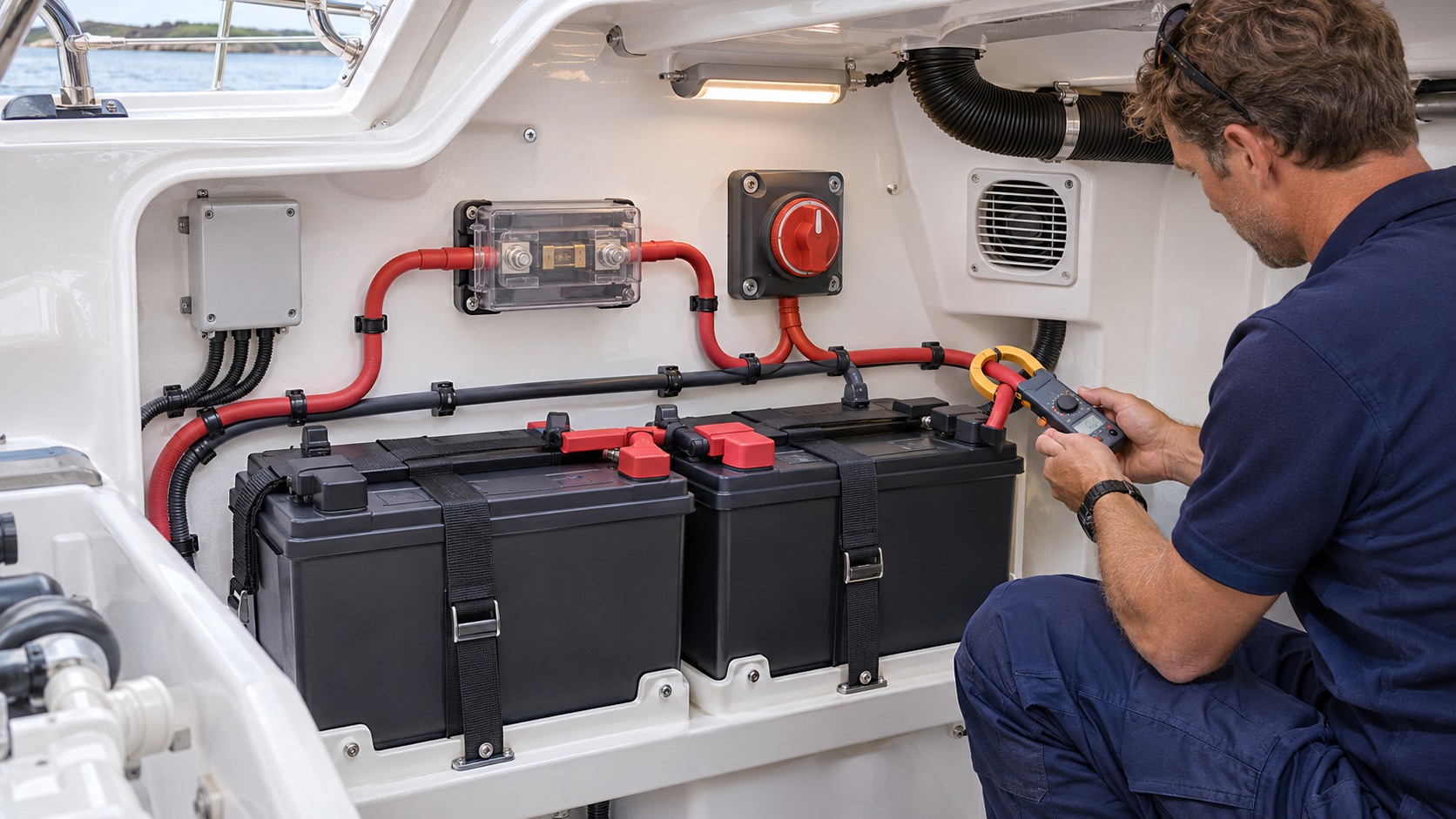
A yacht may have several battery banks. The start battery mainly starts the engine, much like a car battery. The house battery supplies equipment such as the fridge and lights. Some boats also have separate batteries for a thruster or windlass.
This article focuses on the house battery. If you want the fridge and lights to run longer without shore power, start with that bank. Changing it to lithium does not automatically mean replacing the start battery and every other bank. First ask a technician to identify which battery supplies which equipment on your boat.
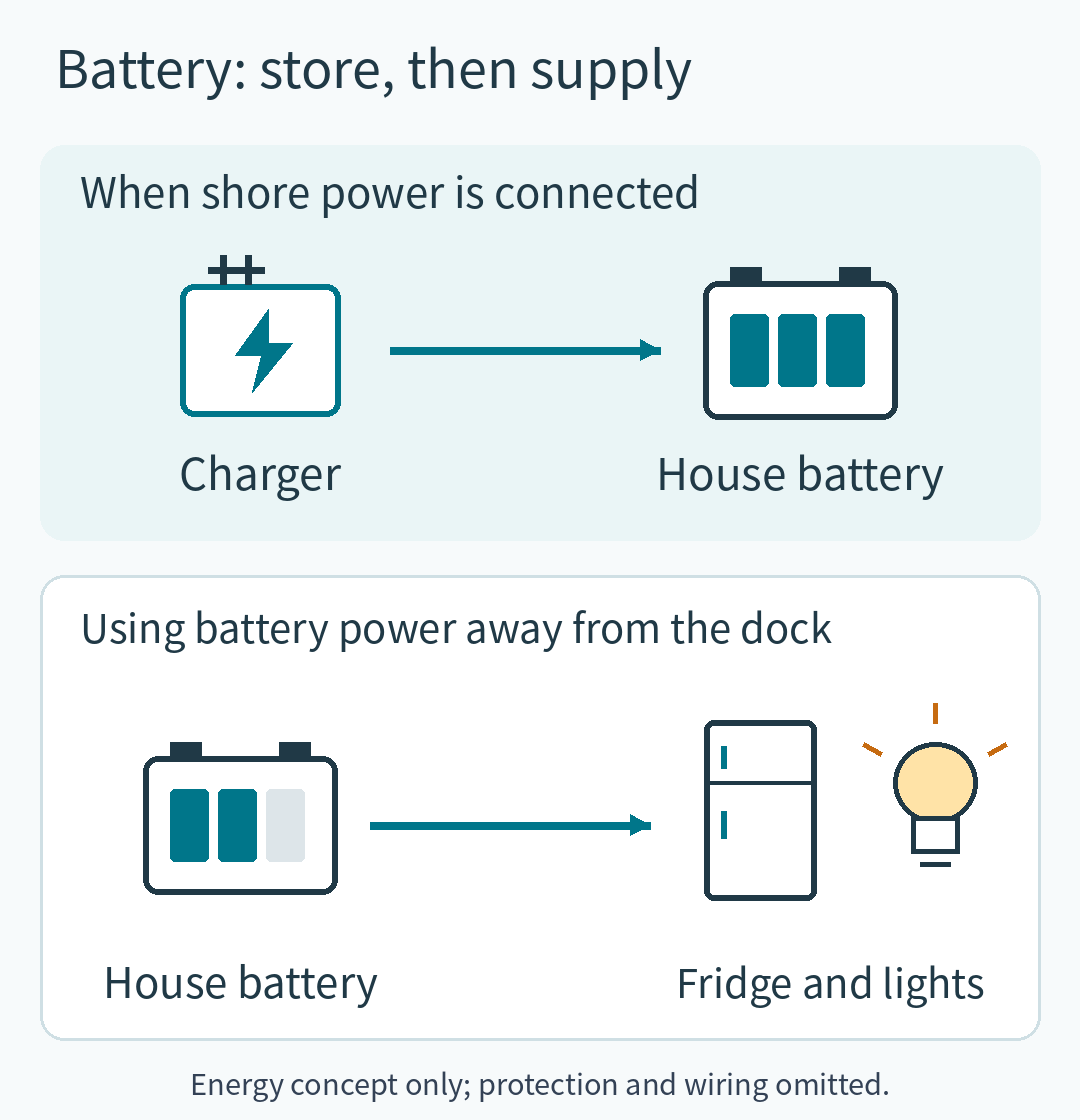
What difference could lithium make in daily use?
The lithium type discussed here is lithium iron phosphate (LiFePO₄, or LFP), used for yacht house batteries. It stores energy; it does not generate it. A suitable choice can offer benefits in weight and usable energy. How much longer equipment will run depends on the actual batteries and appliances being compared, so there is no universal promise of twice the runtime.
For example, you may only want to keep the fridge and lights running while at anchor. The system can be planned around that need. Running air conditioning, water heating and cooking equipment together is a much larger requirement. Explain how you want to use the boat before deciding how many batteries to buy.
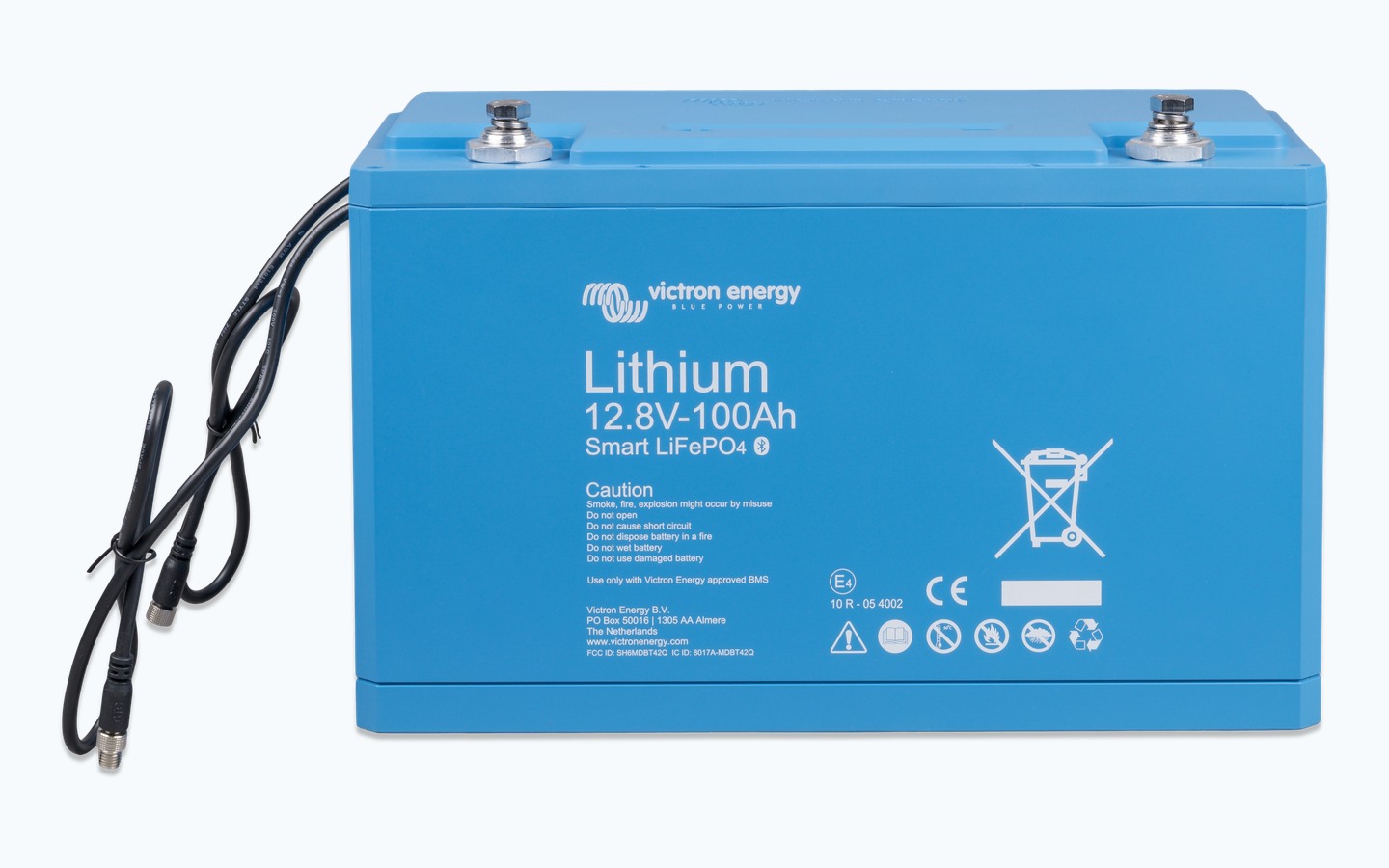
Why check the charger if both batteries say 12 V?
A 12 V label identifies a voltage class. It does not explain how the battery should be charged. Lead-acid and lithium batteries can need different settings, so equipment that charged the old bank may not suit the new one.
Think of a battery as a water tank: capacity is how much the tank can hold, and the charger manages how it is refilled. Changing the tank still calls for checking the refill system. This is only an analogy for storage and replenishment, not a guide to electrical wiring.
At the dock, shore power passes through the boat’s charger to charge the battery. Solar panels, if fitted, have their own charging controller. Each exact model needs checking. Some equipment can stay after a settings change; some may need replacing. You do not need to choose the voltage settings yourself. Ask the technician to explain what stays, what changes and why.
Why does charging under way involve the engine?
Many boats charge their batteries while the engine runs. That electricity comes from an engine-driven alternator. It is different from a separate onboard generator started to supply equipment such as air conditioning.
LFP batteries can accept high charging current. If the old arrangement keeps charging hard, the engine alternator can work too heavily for too long and overheat. Alongside “how fast will it charge?”, ask “can the existing alternator sustain it?” The Victron battery manual explains this risk.
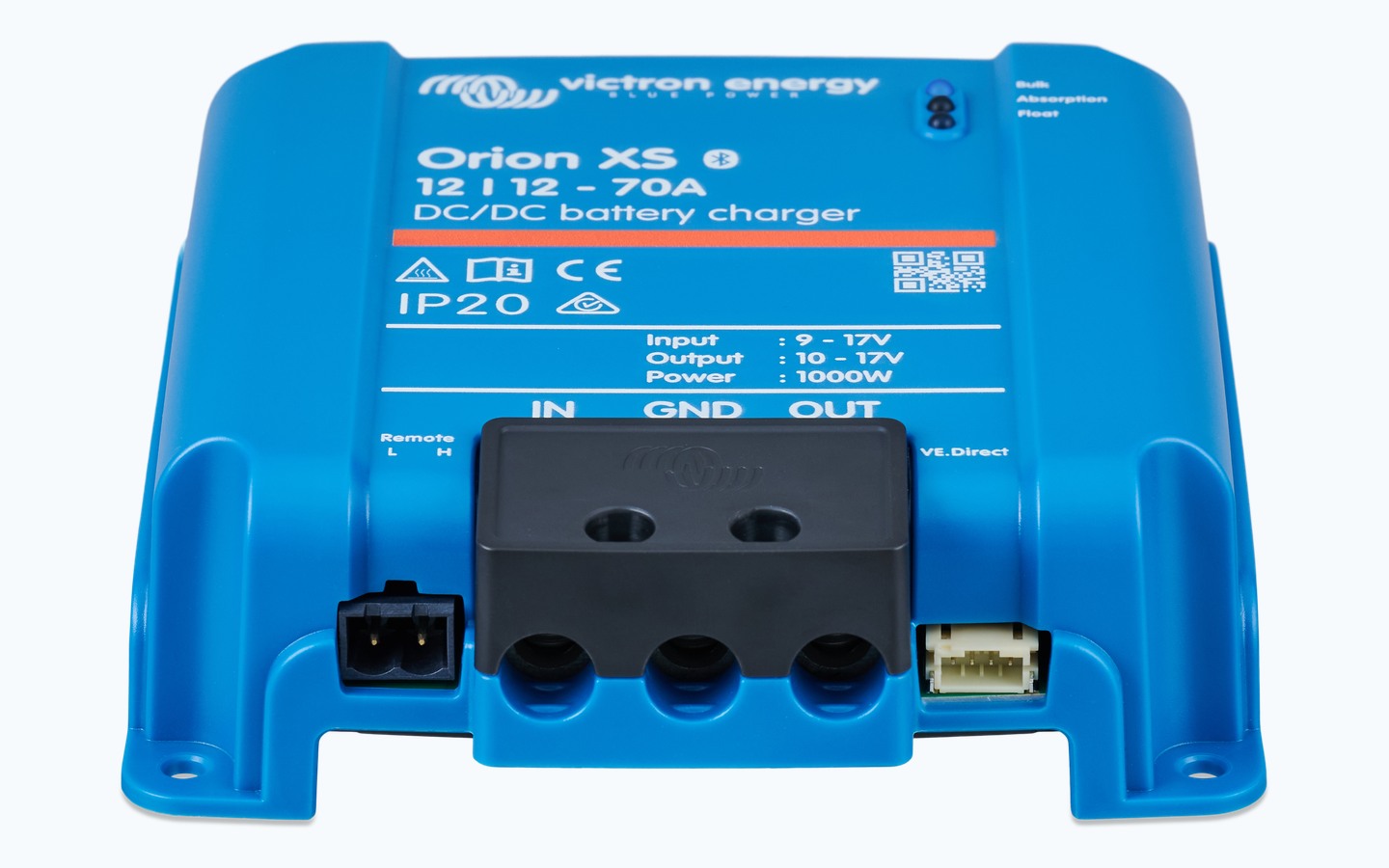
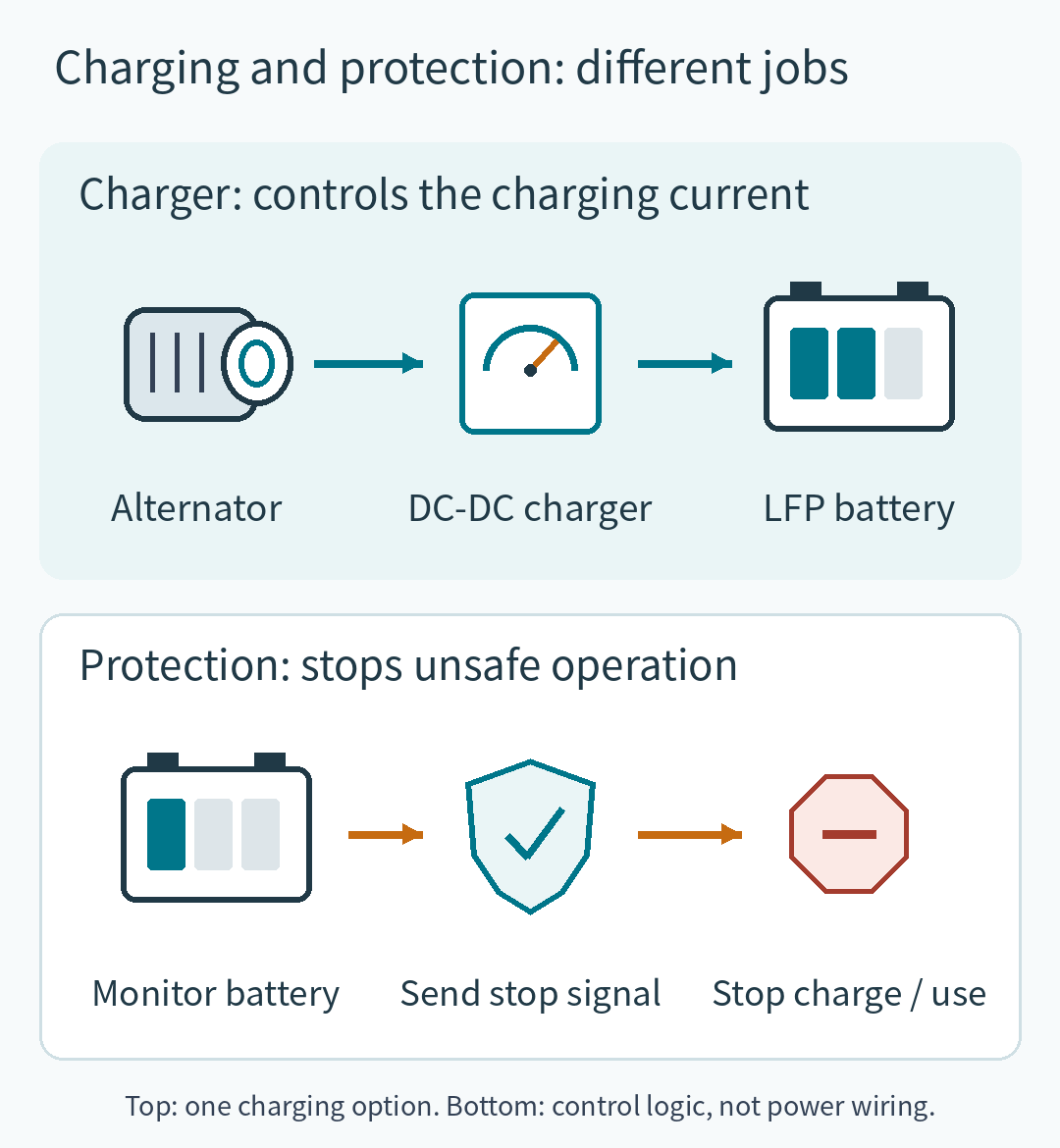
One approach adds a DC-DC charger. You need not memorise the abbreviation. It controls the charging current sent to the house battery and provides suitable charging settings. Think of it as a charging-speed manager. It is one option, with suitability determined by the actual boat’s system.
What does battery protection do?
A lithium battery needs its condition monitored: for example, whether it is too hot, being overcharged or being drained too far. A battery management system (BMS) handles this job. Think of it as the battery’s protective supervisor.
When necessary, it can warn, ask chargers to stop or prevent connected equipment from drawing more power, according to the design. Protection may be built into the battery or use a separate device. The charger handles normal charging; protection tells the system to stop when required. A BMS still needs suitable chargers and circuit protection around it.
The practical owner question is what happens to the fridge, lights, communications and other important equipment if that protection stops their supply. Before the retrofit, ask which equipment will stop, what warning you will receive and what backup supply arrangements are needed.
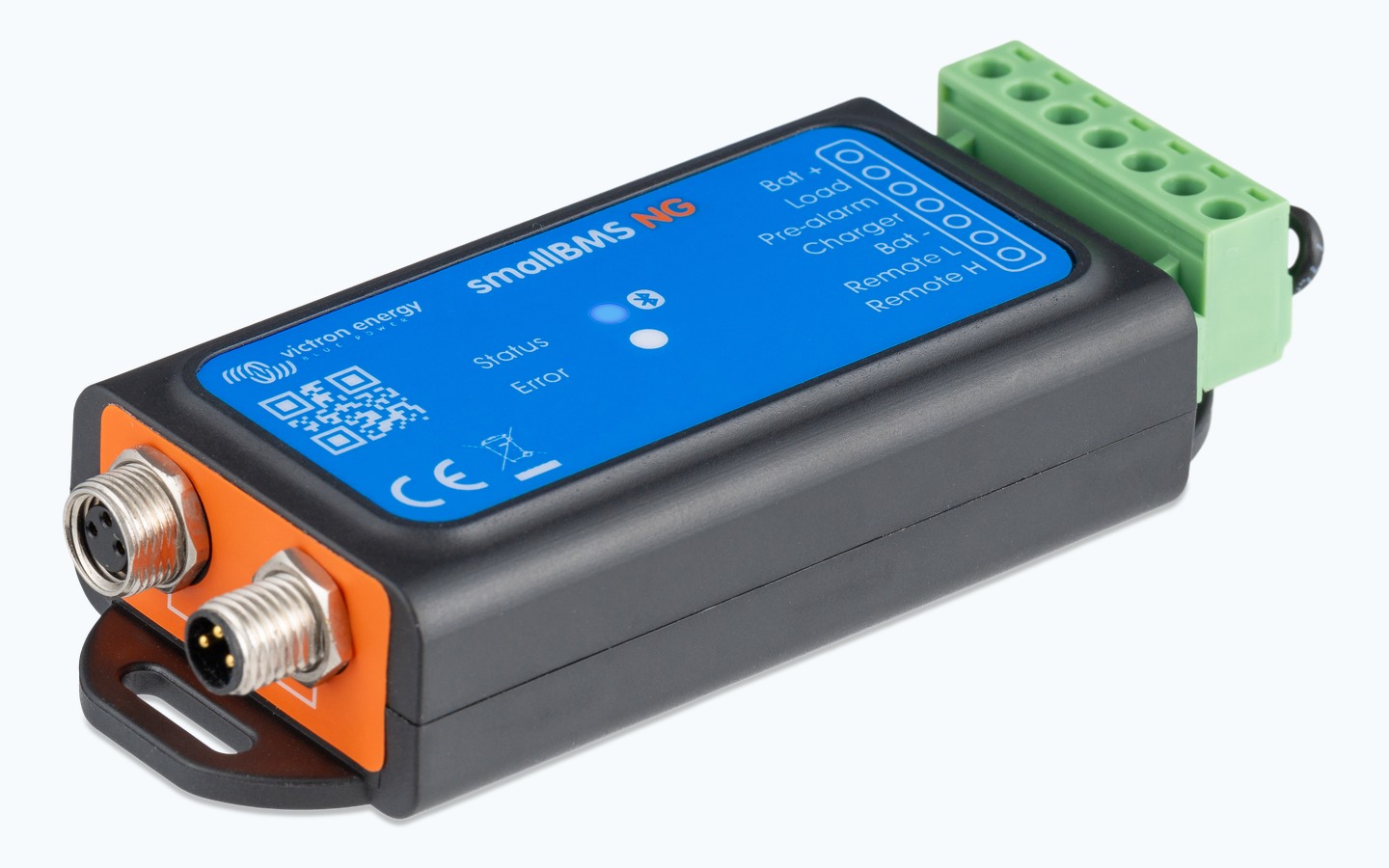
Can the existing appliances and cables stay?
Some may stay, but that needs checking rather than assuming. A technician must assess the cables, switches and fuses against actual demand. A fuse interrupts excessive current in a circuit; protection inside a battery does not replace protection for the wiring around it.
Powering AC appliances from batteries also involves an inverter, which converts battery DC electricity into the AC electricity those appliances need. It has an output limit. Separate two questions: stored battery energy affects how long equipment can run; the supply equipment’s output limits affect what can run together. Conversion losses also count.
The options owners need to recognise
| Option you may see | What it means |
|---|---|
| Battery with built-in protection | Protection is inside the battery; chargers and wiring still need checking. |
| Separate battery management unit | Battery and protection are separate and need the manufacturer’s specified matching products. |
| Add a current-limiting charger | Control current sent to the battery to help manage alternator demand. |
| Control the alternator’s output | Use a compatible regulator to manage the alternator: another charging approach. |
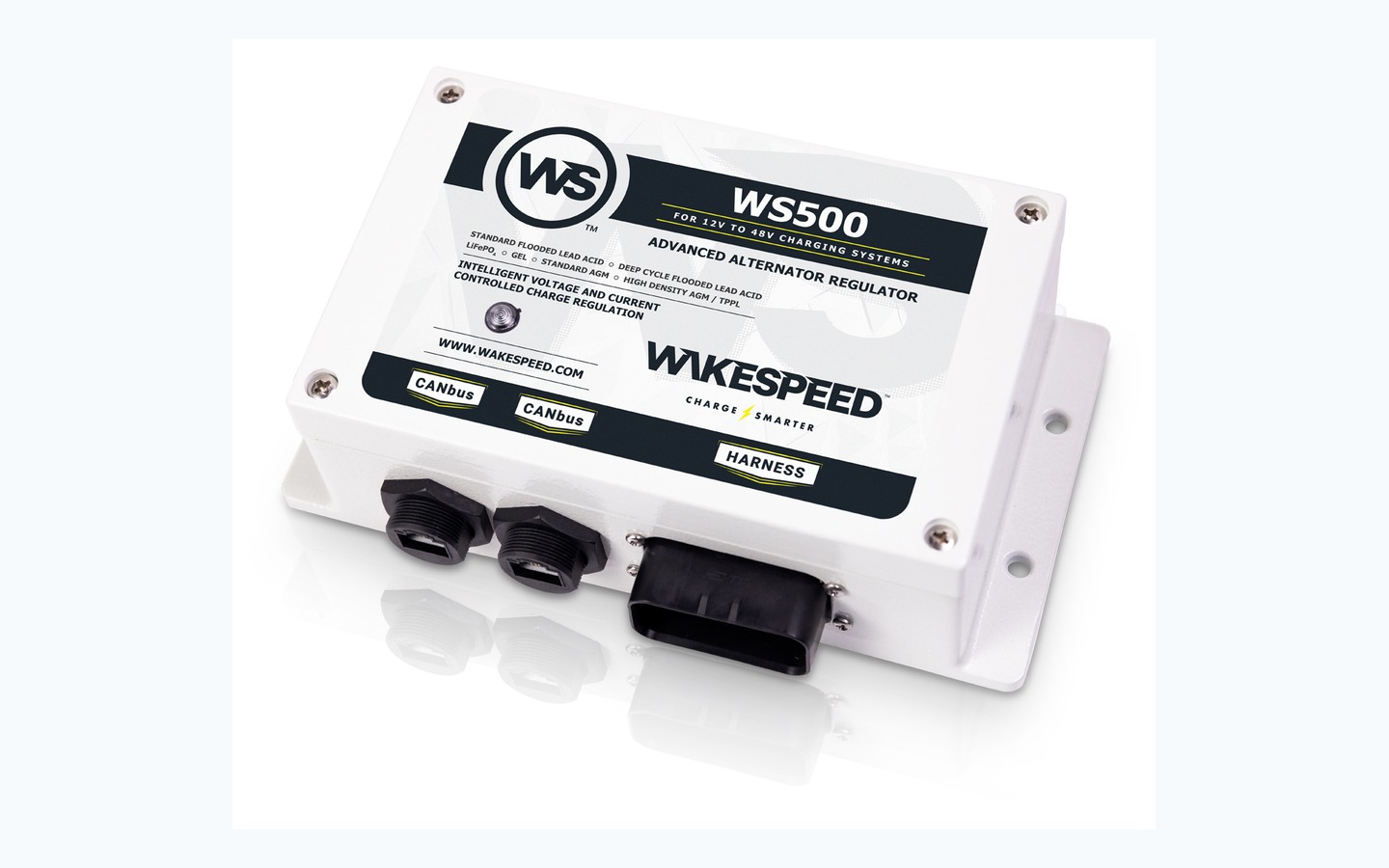
For real examples, the Mastervolt MLI Ultra 12/1250 integrates management and a safety switch inside the battery. The Wakespeed WS500 is an external alternator-output controller. These do different jobs, rather than being interchangeable battery choices. Product names help identify equipment; they do not establish suitability for your yacht.
What should an owner do first?
Before buying a battery or disconnecting cables, photograph the labels on the existing batteries and charging equipment. List the appliances you want to use without shore power, and for roughly how long. Then ask a technician to explain these four points using the equipment on your boat:
- Which battery bank are we replacing, and which banks will remain?
- What will charge the new bank at the dock and under way?
- Which chargers, cables and protection devices can stay, and which need changes?
- What stops when energy runs low or protection operates, and what warning will I see?
Clear answers give you a basis for comparing proposals and quotations. Owners need to understand daily use and how to respond to warnings. A technician familiar with the boat and equipment should handle the wiring, settings and commissioning tests.
For help organising yacht power requirements or coordinating maintenance, share your yacht model, equipment photographs and intended use with Voy Yachting to discuss suitable inspection and follow-up arrangements.