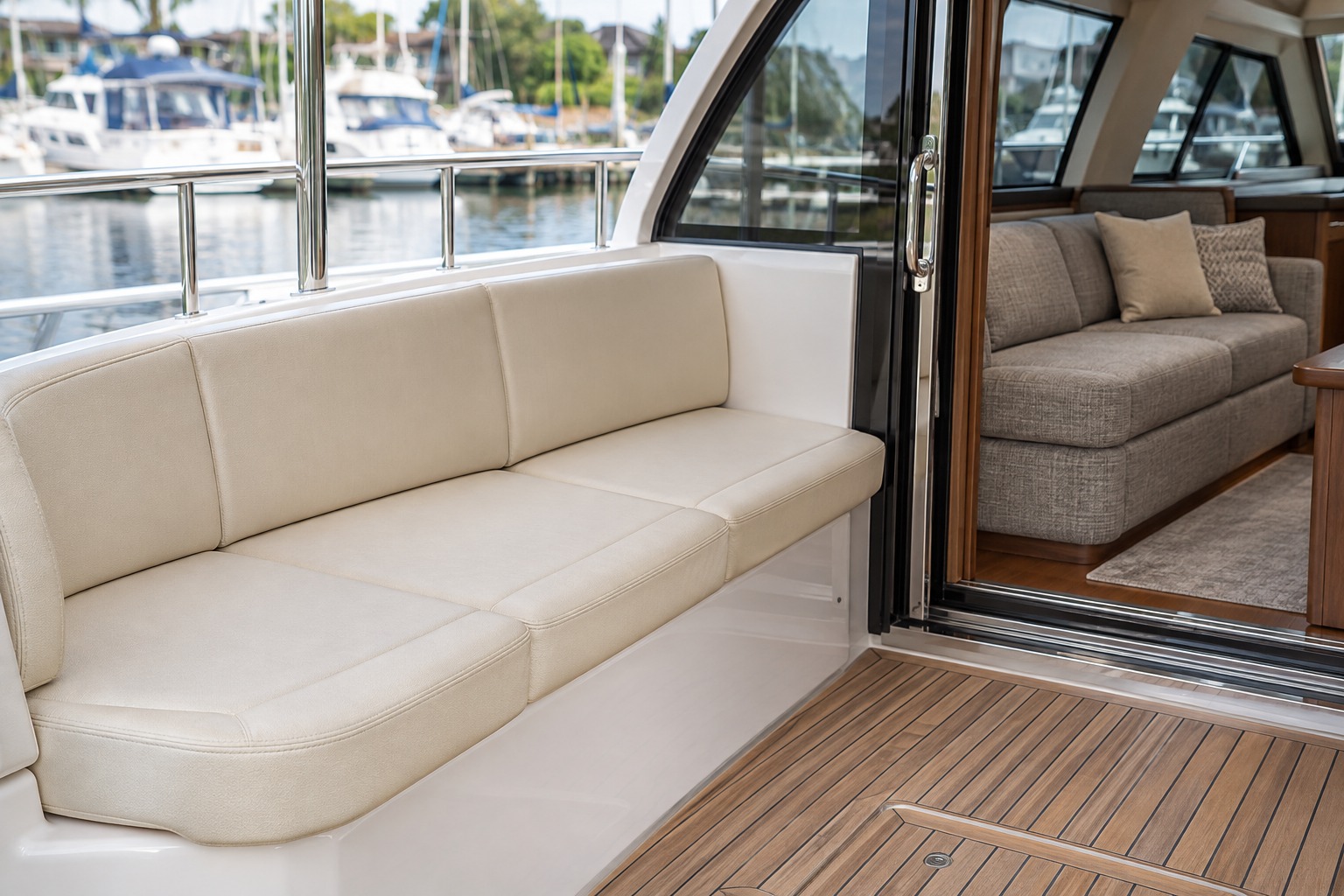

The cover and three article images are AI-generated photographic illustrations of uses and construction, rather than records of a named product or installation.
Choose yacht cushions for their location, then select the covering and foam together. A saloon sofa needs comfortable, cleanable upholstery. A cushion exposed to rain also needs a plan for sunlight, water entry and drying. Replacing the visible covering alone may leave the underlying problem unchanged.
Start with the location before the colour
Tell the upholsterer whether cushions stay outdoors, meet wet swimwear and can be removed to dry. Those answers affect the material combination. Spradling’s marine range distinguishes interior and exterior applications: a marine label alone does not mean every product is suitable for continuous sun and rain.
| Location | First considerations |
|---|---|
| Enclosed saloon sofa | Comfort, wear and cleaning; also check for persistent moisture underneath. |
| Sheltered aft seating | Sideways rain, wet clothing and sunlight may still reach it. Choose for the actual exposure. |
| Exposed seat or sunpad | Confirm exterior use and design the seams, filling, underside and storage arrangements together. |
A leather-like surface or a woven texture?
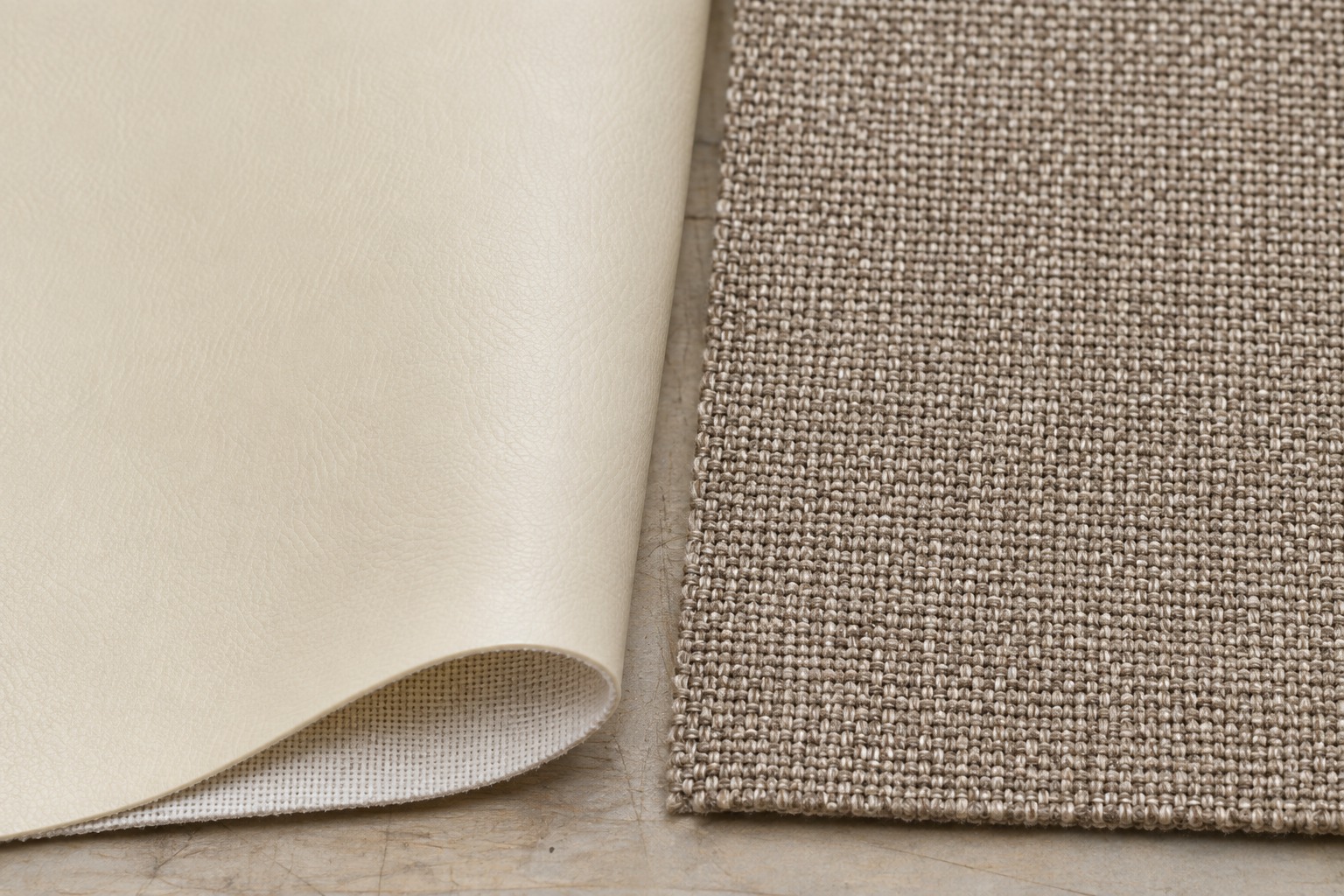
Coated upholstery, such as marine vinyl, generally has a smoother surface that can be wiped clean. Woven upholstery has visible threads and a textile feel. These are different priorities, rather than a quality ranking that can be judged by appearance.
Sailrite’s cushion-fabric guide compares vinyl, woven fabrics and mesh separately. Ask whether the exact range is suitable outdoors and how it should be cleaned, then handle samples and try the seating. Do not treat every synthetic leather as the same material, or assume that a boat-cover fabric is automatically a cushion fabric.
Six covering options: compare the trade-offs, not the marine label
This is a selection framework, not a brand ranking. Coatings, backing, colouring methods and approved environments vary within each category. A quotation should identify the brand, range and colour code, not simply promise premium marine upholstery.
| Option | Why consider it? | Limitations and checks | Where to consider it |
|---|---|---|---|
| Marine PVC/vinyl | A smooth, wipe-clean surface and a familiar leather-like finish for shaped yacht seating. | The finished cushion is not automatically waterproof. Check exterior approval, cleaning restrictions and seam construction; grain and thickness alone do not establish weather resistance. | Cockpit and helm seating where straightforward cleaning matters; use an approved exterior range outdoors. |
| Solution-dyed acrylic upholstery | A woven feel and texture; outdoor upholstery ranges can combine sun resistance with cleanability. | Water repellency does not seal the cushion. Foam, underside and drainage still matter. An awning cloth and an upholstery cloth are not interchangeable merely because they share a brand. | Removable cockpit cushions, sunpads or saloon seating, according to the exact range. |
| Polyester and other outdoor textiles | Additional texture, colour and design choices, including ranges developed for outdoor upholstery. | Polyester names the fibre, not its colouring, finish or sunlight performance. Ordinary indoor polyester is not automatically an outdoor substitute. | Design-led schemes with documented outdoor specifications; compare individual products. |
| Polyurethane-coated upholstery (PU) | Selected ranges offer a soft leather-like feel, including products intended for exterior marine seating. | Resistance to heat-and-humidity-driven hydrolysis varies by formulation. Obtain the exact product’s exterior designation and test data. Household synthetic leather is not an equivalent substitute, but neither is all PU unsuitable. | Interior or exterior seating where feel matters and the specification supports the application. |
| Leather or ordinary interior textiles | Possible appearance and comfort options for a protected saloon. | A luxury label is not evidence of suitability for wet swimwear, seawater or weather. Ask the supplier to confirm the intended use and care regime. | Assess first for dry, protected interiors, rather than treating them as default exterior choices. |
| Silicone-coated upholstery | A separate leather-like coating option, including designated outdoor and marine ranges. | Silicone, PVC and PU are different categories. Do not assume identical performance or cleaning instructions; request samples and full product documentation. | Owners comparing coated finishes and care requirements, subject to approval for the exact location. |
A brand is not a material specification. For example, the official Sunbrella Horizon page describes that range as marine vinyl; the Sunbrella name does not always mean woven acrylic. Meanwhile, the Ultrafabrics Coast specification identifies a polycarbonate PU surface and exterior marine seating use. Judge the named product, not a generic synthetic-leather label.
What about a hot, sticky feel or fading?
Do not choose from a small sample in an air-conditioned showroom alone. Take shortlisted colours aboard and compare their feel in the same actual seating position and sunlight, alongside comfort and cleaning trials. This helps selection but does not reproduce years of weathering. UV and colourfastness claims still need product documentation. Ask a supplier making a never-hot or never-fades claim to state its conditions in writing.
Does a high abrasion rating guarantee durability?
Abrasion, sunlight exposure, hydrolysis and seam strength are different questions. The Association for Contract Textiles’ hydrolysis guidance explains that PU performance depends on resin and manufacturing, and accelerated-test weeks cannot be converted into years of service. Compare the test method, approved environment and care requirements rather than treating one impressive abrasion figure as a lifespan guarantee for the whole cushion.
Official examples help identify the material: Sunbrella Canvas 5453-0000 is listed as acrylic, while the solution-dyeing explanation describes colour being incorporated during fibre manufacture. The Sileather Capri outdoor collection identifies a silicone coating and marine applications. These illustrate categories, not approval for every onboard location.
Why can a cushion be wet inside when water beads on top?
Water repellency encourages droplets to form on the surface; it does not certify a sealed cushion. Even if the material stops water passing through its face, stitching, zippers and openings need separate attention. Think of a zipped bag: the material and the opening are different parts of the problem.
Sunbrella’s quick-dry cushion design document illustrates different approaches: some limit water entry while retaining ventilation; others let moisture leave through a suitable bottom panel. The useful question for an owner is simple: “If water gets inside, where does it get out?” Ask the maker to show you on the actual cushion.
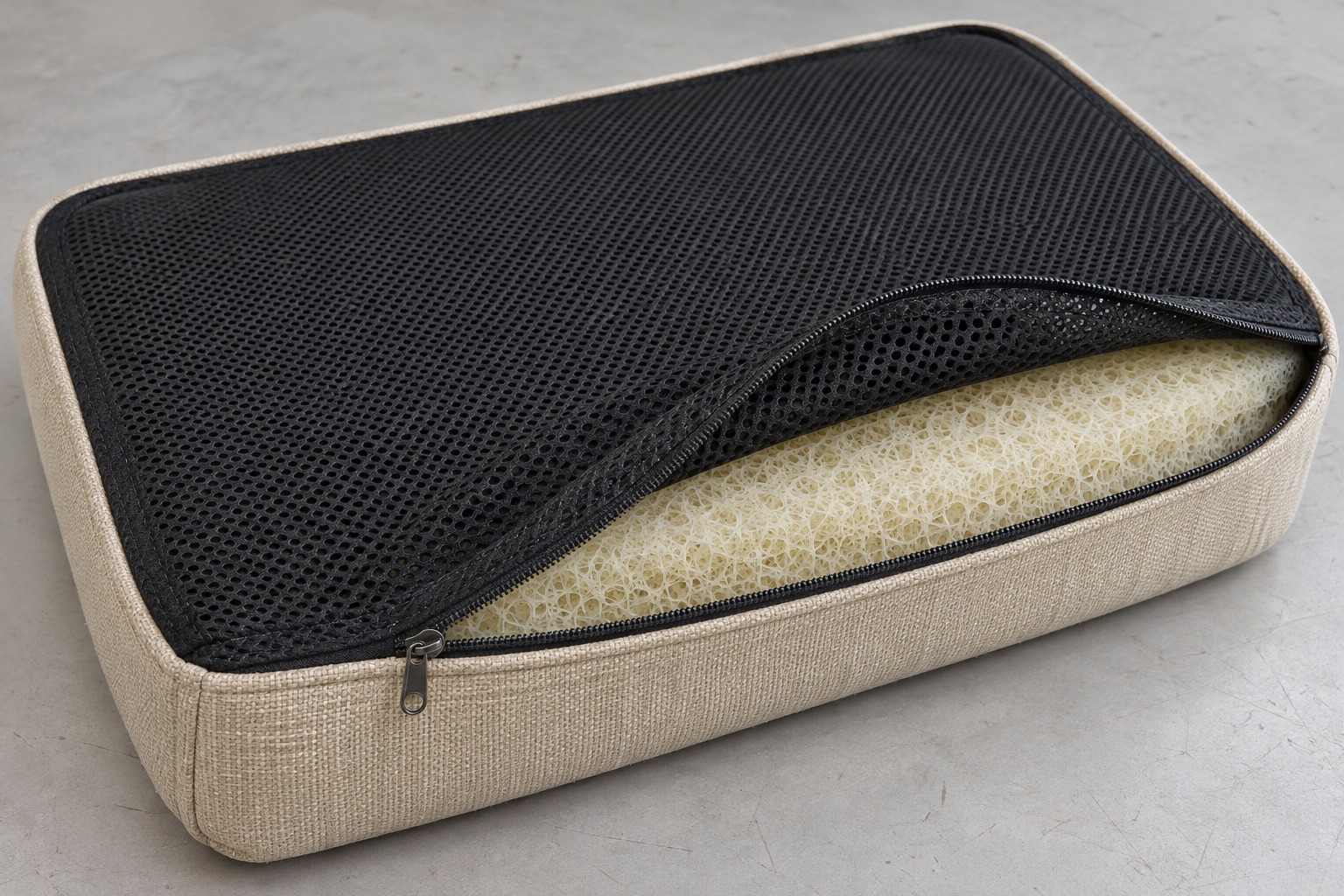
Quick-dry foam still needs a way out
The filling supports your body. Reticulated open-cell foam allows water and air to pass through, so choosing it involves more than comparing softness. CushionRite Dry Fast is one product designed for this purpose. It is not automatically the right replacement for every seat or berth mattress: comfort and use still matter.
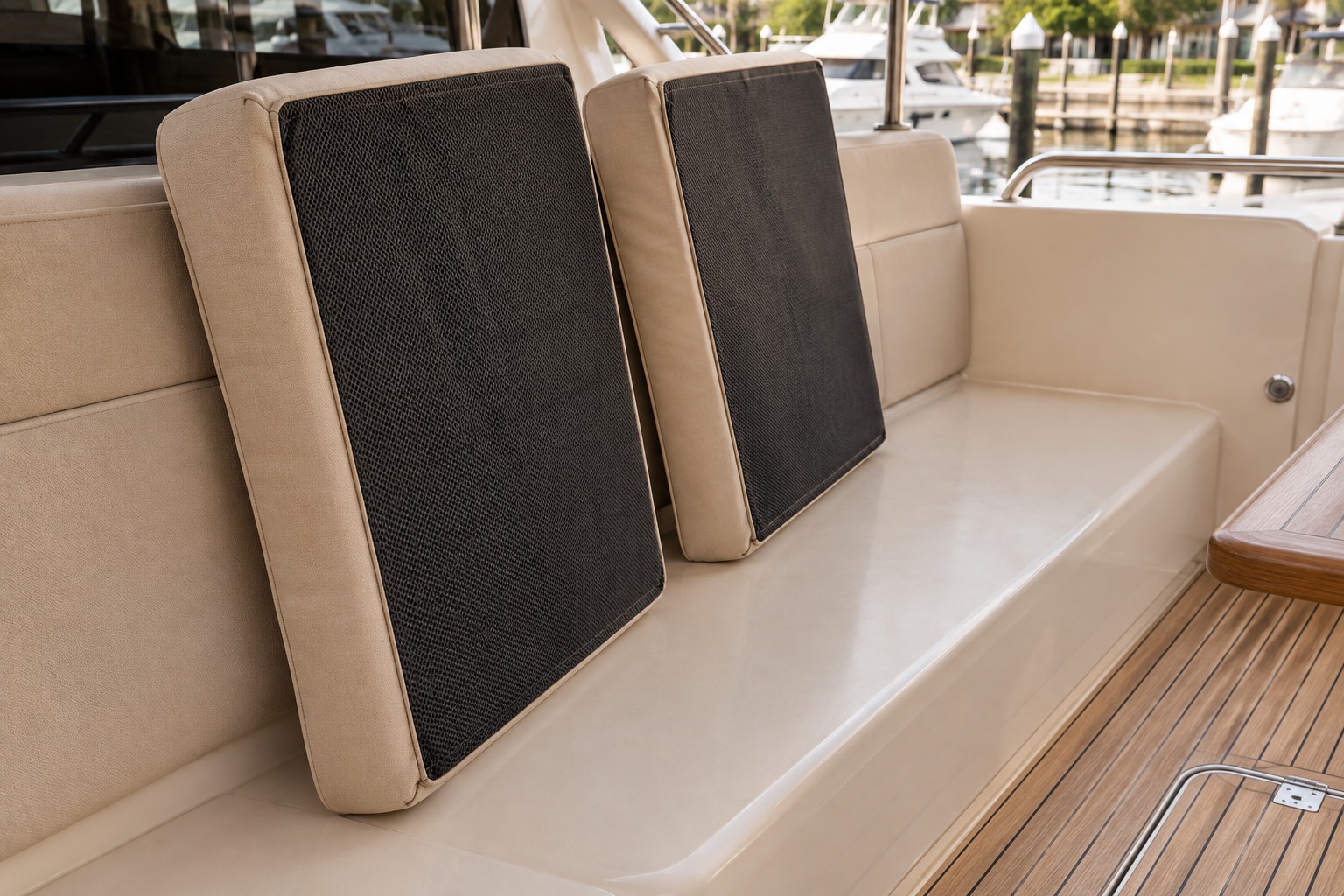
A drainage design needs a compatible underside, such as suitable breathable mesh, and a supporting seat that does not leave the cushion sitting in trapped water. Sailrite’s ventilation guidance warns against completely enclosing the underside in film when breathability is needed. Its curved-cushion example treats the face fabric, mesh bottom and filling as separate components. Buying quick-dry foam alone does not create the whole system.
What can an owner do day to day?
- Identify the material and its care instructions. Different coatings, textiles and backing materials should not share one aggressive cleaning recipe.
- Deal with dirt promptly. Follow the product’s cleaning, rinsing and drying instructions. Mould resistance is not a reason to leave dirt on the surface.
- Check underneath. Inspect removable cushions at their zippers, seams and undersides. Let the bottom dry as well before storage.
For example, Sunbrella Horizon’s care guide recommends prompt spill cleanup, appropriate mild cleaning, thorough rinsing and air drying. It also explains that mildew can grow on retained dirt. Those instructions apply to Horizon; they are not a universal method for every leather-like covering.
The right covering cannot rescue the wrong filling
Choose support, thickness and the water route together. Test a sample close to the finished thickness, rather than judging a thin piece by squeezing it. These are useful distinctions for the discussion:
- Conventional open-cell upholstery foam: a candidate for protected interior seating, with the specification selected for support. High density does not mean flow-through drainage.
- Reticulated drainage foam: for designs intended to let water pass through the filling. Assess it with the face fabric, bottom panel and supporting base. Check usage limits too: the CushionRite Dry Fast page above describes occasional use, so it should not automatically be specified for an everyday liveaboard berth.
- Closed-cell foam: if proposed by the maker, test its support and feel and ask where water inside the cover will go. Low water uptake is not, by itself, a promise that the finished cushion will be comfortable and dry.
List density, firmness and thickness separately. A useful owner acceptance test is to sit on a sample with the intended thickness and base, check support and recovery, and confirm the cushion can still be removed, secured and lifted to open lockers. These are construction decisions, not conclusions to draw from a material name.
Seams, undersides and fixings deserve as much attention as the finish
Ask the maker to show where water enters, where it leaves and how the cushion stays in place. Decorative stitching should not be added without discussing needle holes and rain protection at zippers. Flow-through filling needs a base that does not block drainage. If a waterproof backing is specified, check the drying route separately. Batyline Eden Waterproof, for example, has a waterproof backing film: a textile appearance does not establish water permeability.
Specify the thread as well. GORE’s TENARA marine thread information addresses UV, saltwater and weather resistance, but weather-resistant thread does not make a seam watertight. Also check zipper serviceability, fastening positions, abrasion during removal and clearance for storage hatches.
Five questions owners actually need answered
1. Can I replace only the covers?
Open and inspect first. If the filling is dry, has no persistent odour and still supports properly, with a sound base, request separate prices for recovering and full replacement. Persistent moisture, collapsed filling or a damaged base calls for investigation before choosing the scope. A new covering should not simply conceal the old problem.
2. Is a more expensive covering worth it?
Ask what problem the upgrade solves. For seats used in wet swimwear and around food, prioritise cleaning and water management; for saloon relaxation, prioritise feel and support. Our suggested spending order is suitable filling, underside design and workmanship before decorative upgrades. An itemised quotation makes the difference visible.
3. How many years will the new cushions last?
A universal figure is not meaningful without the product, exposure, care and construction details. Ask whether the warranty covers only the covering or also labour, removal, refitting and transport; clarify fading, staining and claim conditions. A warranty period is not a prediction of finished-cushion lifespan, and laboratory hours or weeks are not years aboard.
4. Can the cushions stay outside permanently?
The answer must cover the complete assembly, not just its fabric. Ask whether routine care requires standing them on edge, removal, protective covers or indoor storage, and make sure the crew can follow it. Do not seal wet cushions away. Fixed seating needs a ventilation, drainage and repair plan before manufacture.
5. Can I use bleach, alcohol or a pressure washer?
Do not transfer a cleaning recipe between materials. Obtain written instructions for the named range and consider the thread, zippers and nearby trim too. The specific bleach procedure in Sunbrella’s marine upholstery care document is not a universal synthetic-leather treatment. Start with the approved mild routine, thorough rinsing and air drying, rather than reaching immediately for an aggressive solvent.
A quotation checklist that makes comparisons meaningful
- Covering: brand, range, colour code, exterior approval, sample and care instructions.
- Filling: type, thickness and support specification; retained or replaced.
- Construction: underside, drainage and ventilation, thread, zippers, piping and fixings; precisely which component a waterproof or water-repellent claim covers.
- Scope: measurement and patterning, removal and refitting, base repairs, curved panels, decorative stitching and protective covers; identify exclusions.
- Delivery: a first-piece sample where appropriate, timing, onboard acceptance, spare material and future colour-matching arrangements.
- Warranty: responsibility for the material versus workmanship, exclusions and treatment of labour and removal costs.
Our recommended order: establish the location and realistic care routine, resolve drainage and support, then choose the appearance. That helps avoid both unnecessary specification and an attractive new cover that leaves the cushion wet, stuffy or uncomfortable.
If you are arranging a yacht refit, VOY Yachting can discuss repair assessment and project coordination. Cushion materials and replacement scope should be confirmed against the actual onboard condition.