
Window film is a thin layer applied to glazing to reduce solar heat entering a yacht’s cabin. Depending on the product, it can also reduce glare and ultraviolet exposure. It can help with a sun-exposed seat beside a large window or glare on a screen. Start by deciding how much daylight to retain, how much solar energy to reject and which window is being treated. Colour alone cannot answer all three questions.

Why does the window seat feel hot?
Sunlight passes through glazing and warms the sofa, floor and people inside. Solar-control film reflects and absorbs part of that energy, reducing the amount entering the cabin. It does not refrigerate the space. An already-hot cabin still needs ventilation or air conditioning, and heat entering through the roof, hull and open doors remains.
Discomfort in direct sunlight and an air conditioner that is not cooling need different checks. Window shading and film can address solar exposure; a cooling fault needs investigation of the air-conditioning system. LLumar’s manufacturer FAQ distinguishes heat reduction, glare control and UV protection.
Three figures worth understanding
| Specification | What it tells an owner |
|---|---|
| Visible light transmission (VLT) | How much visible light passes through. Higher values generally mean a brighter view; lower values mean a darker one. |
| Total solar energy rejected (TSER) | The proportion of overall solar energy rejected. Compare figures for equivalent glazing and test conditions. |
| UV rejection | Protection against ultraviolet radiation. This is not the percentage of all solar heat rejected. |
A very high UV-blocking percentage does not mean the same percentage of all solar heat is blocked. Infrared figures also need a stated wavelength range and definition. Compare overall solar performance on a consistent basis, then light transmission and reflectance.

A relatively clear film can still control solar heat
Some films selectively handle different wavelengths, retaining more visible light while reducing solar gain. The April 2026 bulletin for 3M Prestige 70 Exterior lists 72% visible-light transmission and 51% total solar energy rejected for the film on single-pane clear glass. A relatively bright window can therefore offer solar control.
These are laboratory figures for that specific film-and-glass combination, not a promise for every yacht. Applying the same film to already-tinted glass produces a darker result. Assess the combined glazing and film, and try a sample on the actual window rather than relying on a loose colour swatch.
Treat cabin side windows and helm glazing differently
Comfort, daylight and appearance are central to choosing film for saloon side windows. At the helm, a clear outward view comes first. Check samples at dusk and after dark with cabin lights on: can reflections of lights, instruments or furniture obscure the view? Does the existing tint become too dark once film is added?
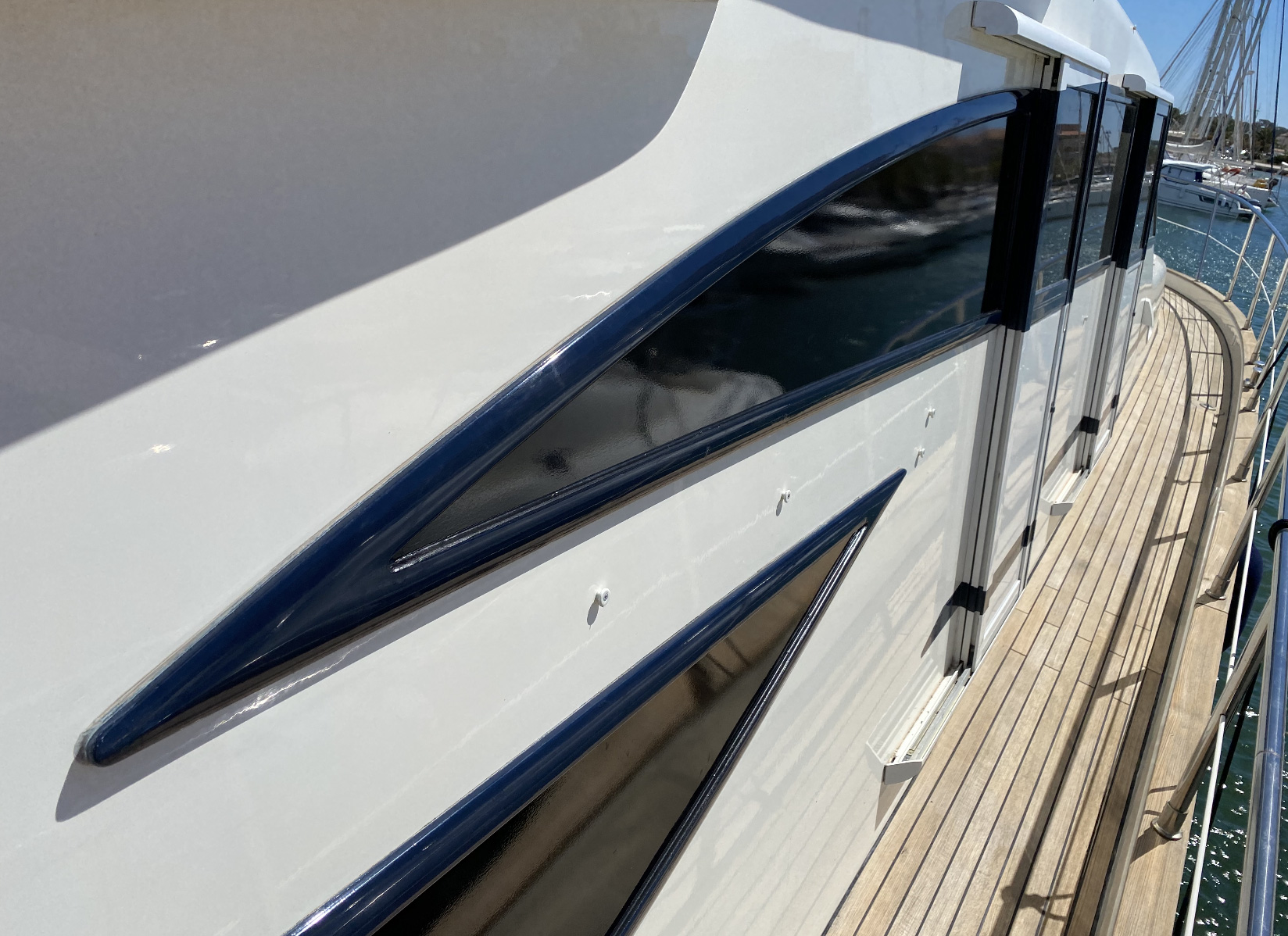
A daylight photograph cannot establish suitability for a windscreen. Have the installer check the builder’s requirements and applicable rules, then assess the sample from the actual driving position. This article does not prescribe a universal minimum transmission or treat building and automotive specifications as proof of marine compliance.
Identify the glazing and the installation side first
Establish whether the panel is glass, acrylic or polycarbonate, and whether it has laminates, coatings or old film. Match the product to the substrate and its specified interior or exterior application. The 3M exterior product cited above specifies glass; its data cannot be extended to every plastic boat window.

Ask the installer to list each window, film model, application side, compatibility confirmation and edge treatment in the quote. Installation involves cleaning and removing application water. Drying time and the first cleaning must follow the actual product and site conditions rather than one fixed period for every yacht.
Clean gently and watch the edges
Follow the manufacturer’s care instructions, using suitable cleaner and a soft, non-abrasive cloth. Avoid metal scrapers, sharp objects and abrasive pads. Persistent bubbling, lifting edges, adhesive failure or optical distortion should be checked by the installer; do not repeatedly peel the edges or experiment with strong solvents.
To address a hot window seat, record the affected window and time of day, then compare daylight, overall solar control and reflections. VOY Yachting can help coordinate yacht maintenance and management arrangements; the specialist installer must confirm the film and glazing combination.
Sources: LLumar Window Film FAQ, LLumar performance data, and 3M Prestige 70 Exterior bulletin, April 2026. Accessed 18 November 2026.


