

Where the bow points and where the yacht moves are different questions. Heading (HDG) describes the direction of the bow. Course over ground (COG) describes movement relative to fixed land. Wind or current can move the yacht sideways, so the two directions can differ. Check the data label before comparing readings.
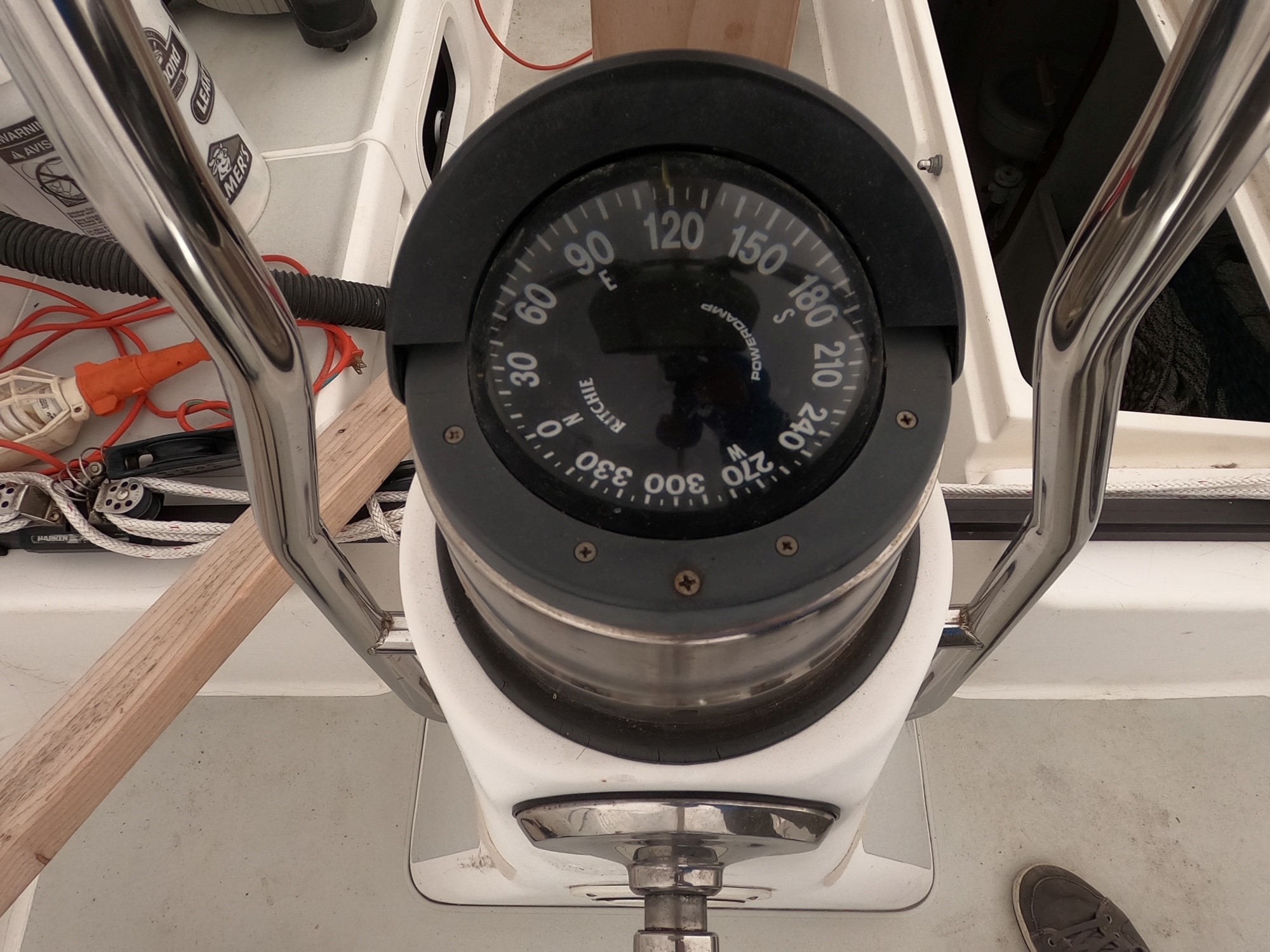
Picture a north-pointing yacht carried sideways by current
Suppose the bow remains pointed north and the yacht moves forward through the water while an eastward current carries it sideways. Seen from the shore, it may travel northeast without the bow pointing northeast. Heading remains north; COG points along the resulting movement. The diagram illustrates direction only, without specified current, boat speed or a real navigation route.
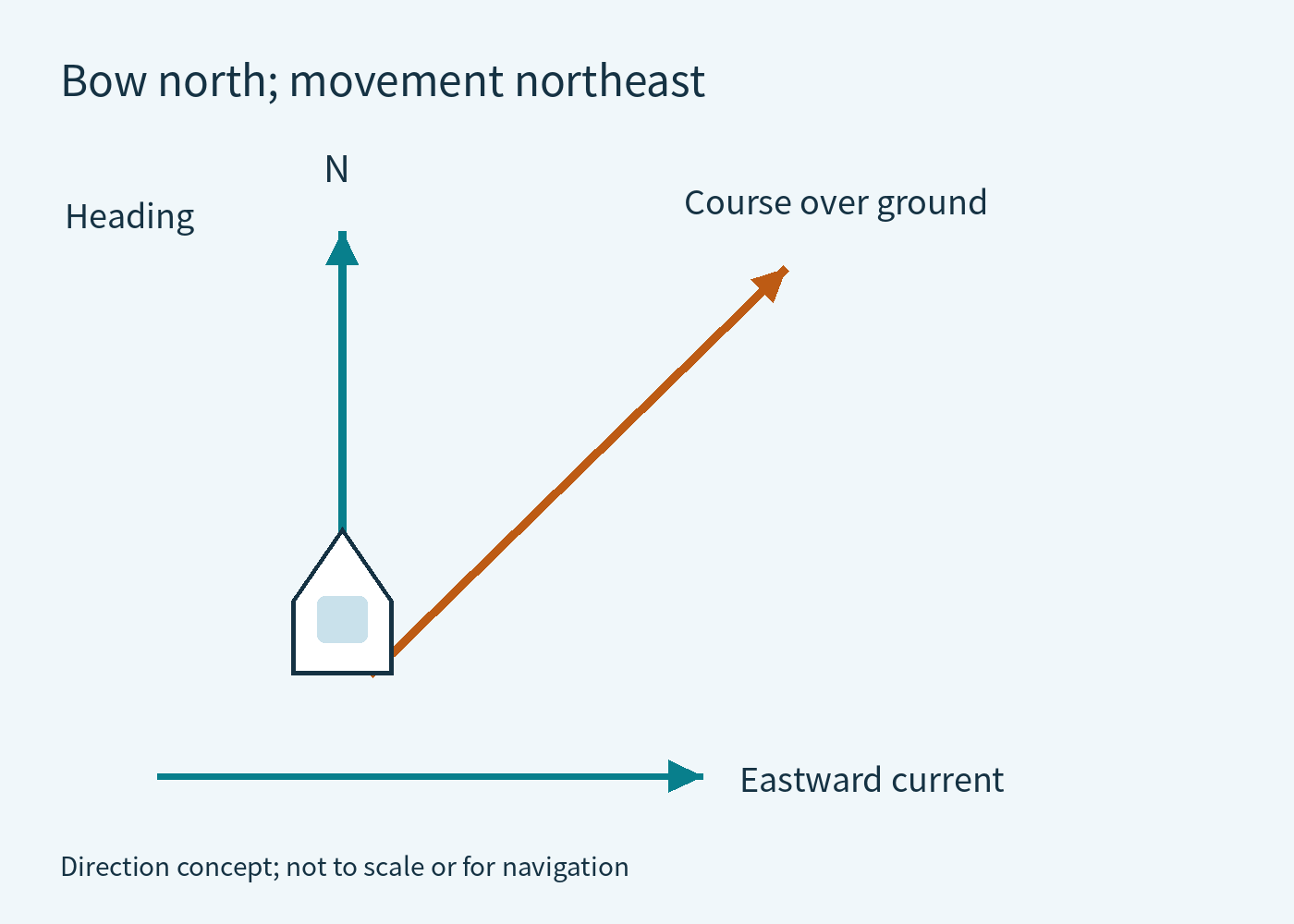
Raymarine’s navigation glossary defines COG relative to fixed land and explains how wind, tide and current can make it differ from heading. This also explains why a chartplotter can display two direction lines.
Where do the readings come from?
| Data | The question answered | Example source |
|---|---|---|
| Heading / HDG | Where is the bow pointed? | Electronic compass, compatible heading sensor or satellite compass |
| Course over ground / COG | Which way is the yacht moving relative to shore? | Movement data from a satellite navigation receiver |
| Recorded track | Where has the yacht been? | A sequence of positions recorded by the plotter |
Ordinary positioning capability should not be treated as a heading sensor. Some satellite compasses provide heading separately; identify the actual device’s functions. Ask an installer: “Is this field heading or COG, and which source supplies it?” There is no need to begin by memorising communications codes.
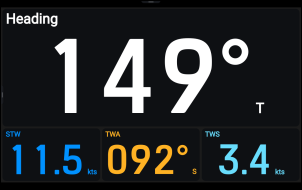
Check what the boat icon and lines represent
The manual for specified Garmin GPSMAP series offers GPS COG, a connected heading source, or both lines. Confirm the selected source rather than guessing from a line’s colour or the vessel icon. Menus and colours differ by model.
Chart orientation is a separate choice. North-up keeps north at the top; head-up rotates the chart with heading; course-up uses the direction of movement. A rotating chart does not by itself mean the yacht is spinning. Check the orientation mode before interpreting the heading and movement information.
At rest or low speed, do not use COG as bow direction
When there is little movement, COG is unsuitable for deciding where the bow points. Garmin’s relevant support article warns that COG is not a reliable indicator of heading at low speeds. Use a suitable, correctly installed and calibrated heading source when stationary.
If two screens show different heading readings, first confirm their sources and whether both use true or magnetic north. True north is geographic north; magnetic north follows the Earth’s magnetic field. Mixing references can make unlike numbers look like a sensor fault.
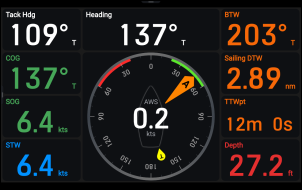
When should a technician investigate?
If heading remains inconsistent with a reliable reference after checking the label, source and north reference, or a discrepancy appears after new equipment is installed, have the installation, magnetic interference and calibration checked. Raymarine’s alignment guidance identifies electric motors, high-current cables and marina structures as possible sources of magnetic interference. Do not adjust an offset simply to force unlike readings to agree.
Provide photographs, field names, selected sources and whether the issue happens at rest, at low speed or underway. This is more useful than reporting only that “GPS direction is wrong.” Navigation still requires a proper lookout and suitable navigation information; a single arrow cannot establish a safe route.
For instrument updates or maintenance, share the equipment models and observed situation with VOY Yachting to discuss maintenance coordination and follow-up.
Sources: Raymarine Navigation Glossary 81401 Rev 6 and Heading Alignment 87342 Rev 6; Garmin GPSMAP manual v16 (September 2026) and the linked manufacturer support article. Accessed 19 November 2026. Diagram is conceptual and not for navigation.


