


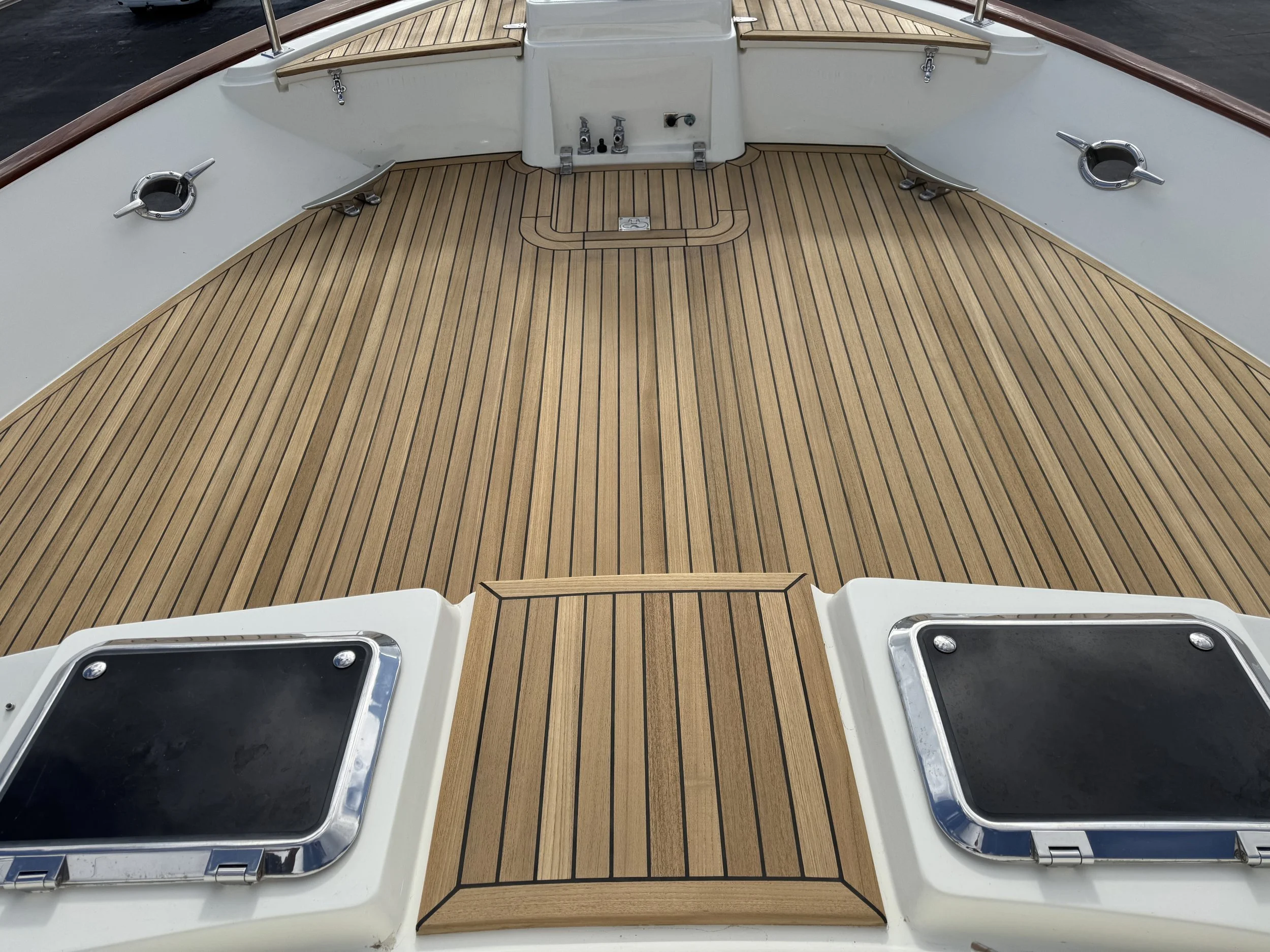
A yacht deck with tan grain and dark lines may be natural teak or a synthetic material. Start with your priorities: preserving the character of real timber or simplifying routine care. Then compare actual products, how they feel and the replacement work involved.
This article compares natural teak with PVC synthetic teak decking, using Flexiteek’s published information as a specific example. Other brands, foam pads and different composites require their own cleaning and repair instructions.
Similar grain can conceal different construction
Real teak is timber, with natural variation between planks. TDS templates its prefabricated decks to the vessel and uses marine caulk in the plank seams. Synthetic decks can also be made as shaped panels; Flexiteek joins its extruded profiles by vinyl welding. Visible lines do not establish that the same black seam compound will repair both systems.
Photographs help compare appearance, but installation records, product identification and samples establish the material. The illustration below shows a material concept rather than identifying a branded product.
How will it feel underfoot in the sun?
Synthetic teak does not guarantee a cool summer surface. Flexiteek acknowledges that its decking gets hot in sunlight; its cooling comparison has a specified reference material and does not establish superiority over every real-teak deck. TDS promotes teak’s thermal comfort, but that is not a controlled Hong Kong test of your shortlisted samples.
Ask to place samples side by side under the same exposure. Compare texture, acceptable comfort and grip when dry and wet. This is a practical selection exercise, not a slip certification or a temperature measurement by touch.

Lower maintenance still requires the right method
With real teak, avoid cleaning away usable timber. TDS warns that pressure washing, harsh chemicals and abrasive treatment can erode fibres and affect seams. Natural silver-grey weathering is an acceptable appearance for some owners; restoring a golden colour is not always necessary.
Flexiteek’s care sequence starts with fresh water and a pH-neutral cleaner, with specific procedures for tougher marks and specialist treatment for large-area restoration. A synthetic surface is not permission to use arbitrary wood cleaners, solvents or power sanders. Follow the current instructions for the actual installed product.
Damage changes the repair options
Natural-teak work can involve seam renewal, isolated plank replacement or surface restoration; remaining timber and system condition matter before sanding. Flexiteek describes vinyl welding and individual-profile replacement among its repair options, assessed by a product specialist. Repairability does not promise an invisible result for every defect.
If the existing deck is locally repairable, obtain that option alongside full replacement. The comparison below sets out owner questions rather than ranking every product in either category.
| Question | Real teak | PVC synthetic (Flexiteek example) |
|---|---|---|
| Material / appearance | Natural timber grain | Synthetic material with a teak-look finish |
| Routine care | Gentle cleaning; preserve timber | Product-specific cleaning; not maintenance-free |
| Seams / local repair | Caulk and timber repairs | Welding or profile replacement by a specialist |
| Before replacement | Assess old material and substrate | Assess removal and substrate preparation too |
A replacement quote must include the work underneath
Replacement includes removal, substrate inspection and repairs, templating, panel fabrication and bonding. TDS checks the exposed vessel surface during refits; Flexiteek explicitly advises against laying directly over existing teak or foam decking. A synthetic covering cannot automatically resolve moisture or debonding underneath.
Request comparable, itemised scope: removal and cleaning; inspection and pricing of additional substrate repairs; product and thickness; bonding system; hatch and drainage edges; handover and care instructions. Material price alone cannot establish the cheaper completed job.
Owners who value natural timber and accept its care requirements can shortlist real teak. Those seeking fewer timber-care tasks and comfortable with a synthetic feel can compare PVC options. If the existing deck moves, leaks or stays locally wet, establish the condition underneath before choosing the new covering.
VOY Yachting can help coordinate yacht repairs and refurbishment. Overall photographs, defect close-ups and existing material records help define the inspection and quotation scope.

Sources
- TDS — Teak Decking
- TDS — Teak Deck Maintenance (2026-05-06)
- Flexiteek — Manufacturing Process
- Flexiteek 3 — Product Information
- Flexiteek — Care
- Flexiteek — FAQ
Checked 20 November 2026. Product examples do not establish instructions for every brand.


