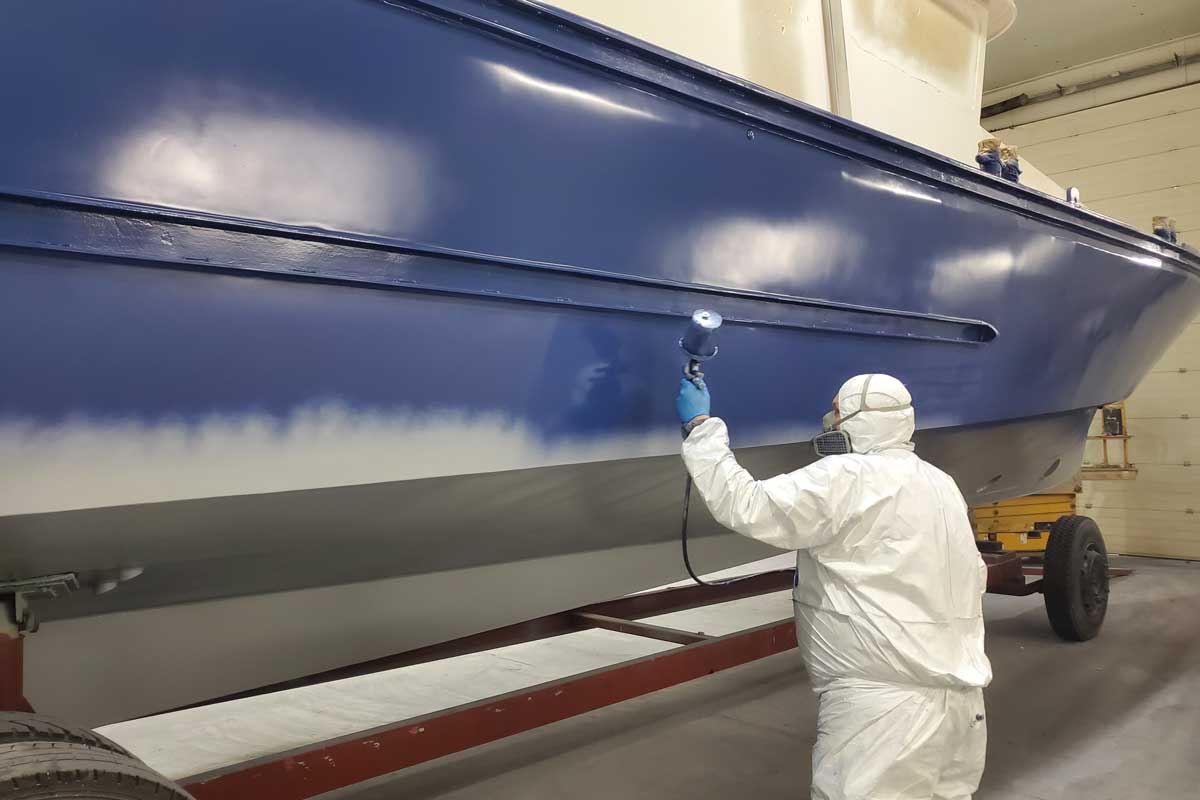

A yacht repaint quotation should not be compared by the single line “spray the whole boat”. The real scope is defined by the condition of the existing coating, the substrate, the amount of repair and fairing, the primer and topcoat system, the painting environment, and the fittings that must be removed and reinstalled. A comparable quotation separates these items instead of giving only a length, a colour and a total.
Why can two quotations for the same yacht be so different?
The owner sees the final gloss, but much of the labour sits underneath it. International’s guidance says that an existing coating should be inspected for damage, separation, peeling and poor adhesion before finishing. ALEXSEAL’s application guide treats surface preparation, substrate priming, fairing, surfacing, final priming and topcoat application as one connected system. Spraying a new colour over a sound surface is therefore not the same job as removing failed layers and rebuilding the coating system.
Eight items every repaint quote should identify
| Item | What the quotation should state | Why it matters |
|---|---|---|
| 1. Work area | Hull sides, superstructure, flybridge, doors, stripes, lettering and excluded areas | “Whole yacht” may describe a different area in each quote |
| 2. Coating and substrate survey | Fibreglass, aluminium or steel; adhesion of the old paint; areas to be taken back to substrate | Each substrate and failure mode requires different preparation |
| 3. Removal and masking | Which rails, frames, emblems, lights, vents, seals and fittings are removed, and which are only masked | Removing fittings changes edge quality, time and reassembly risk |
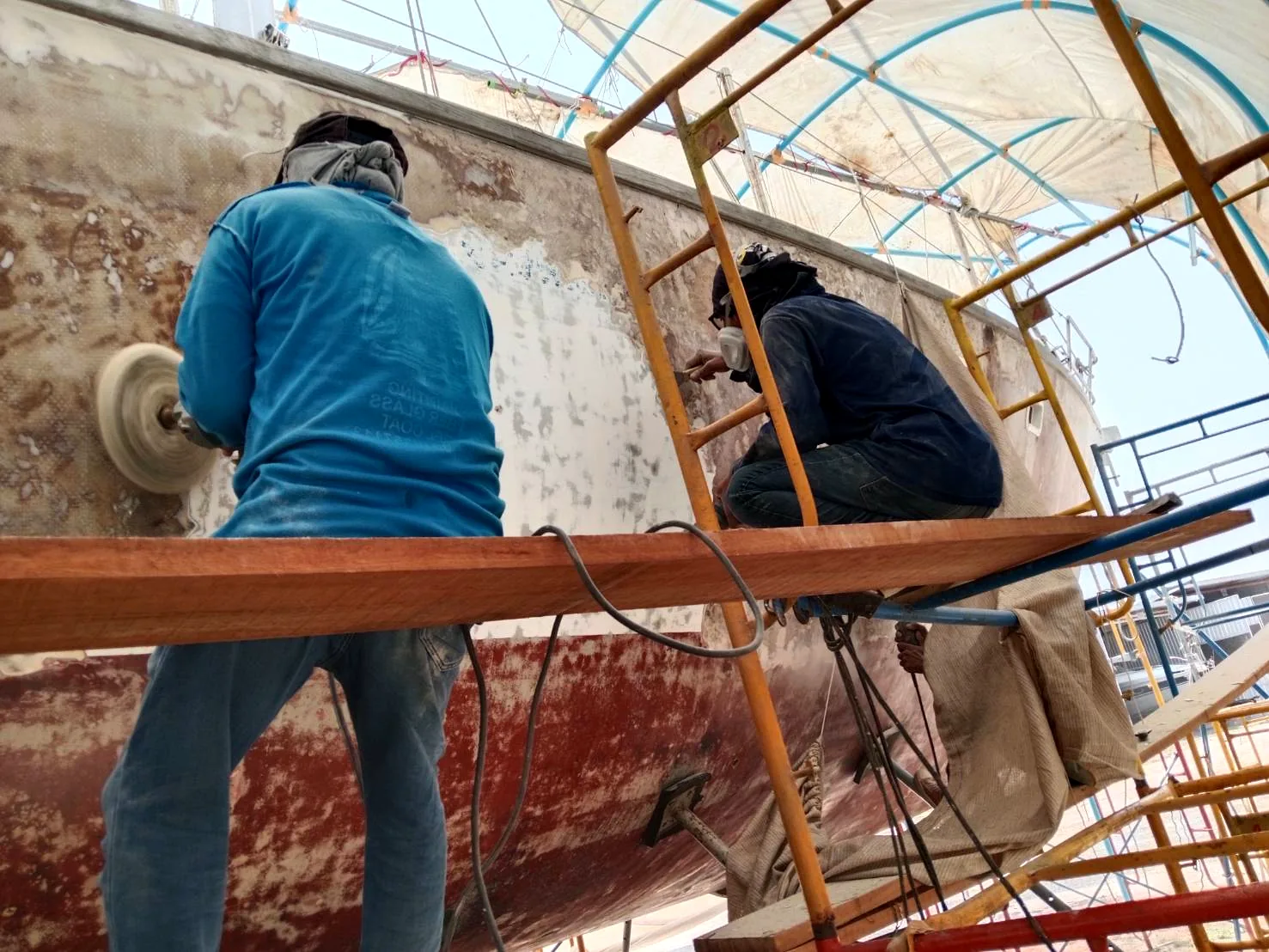
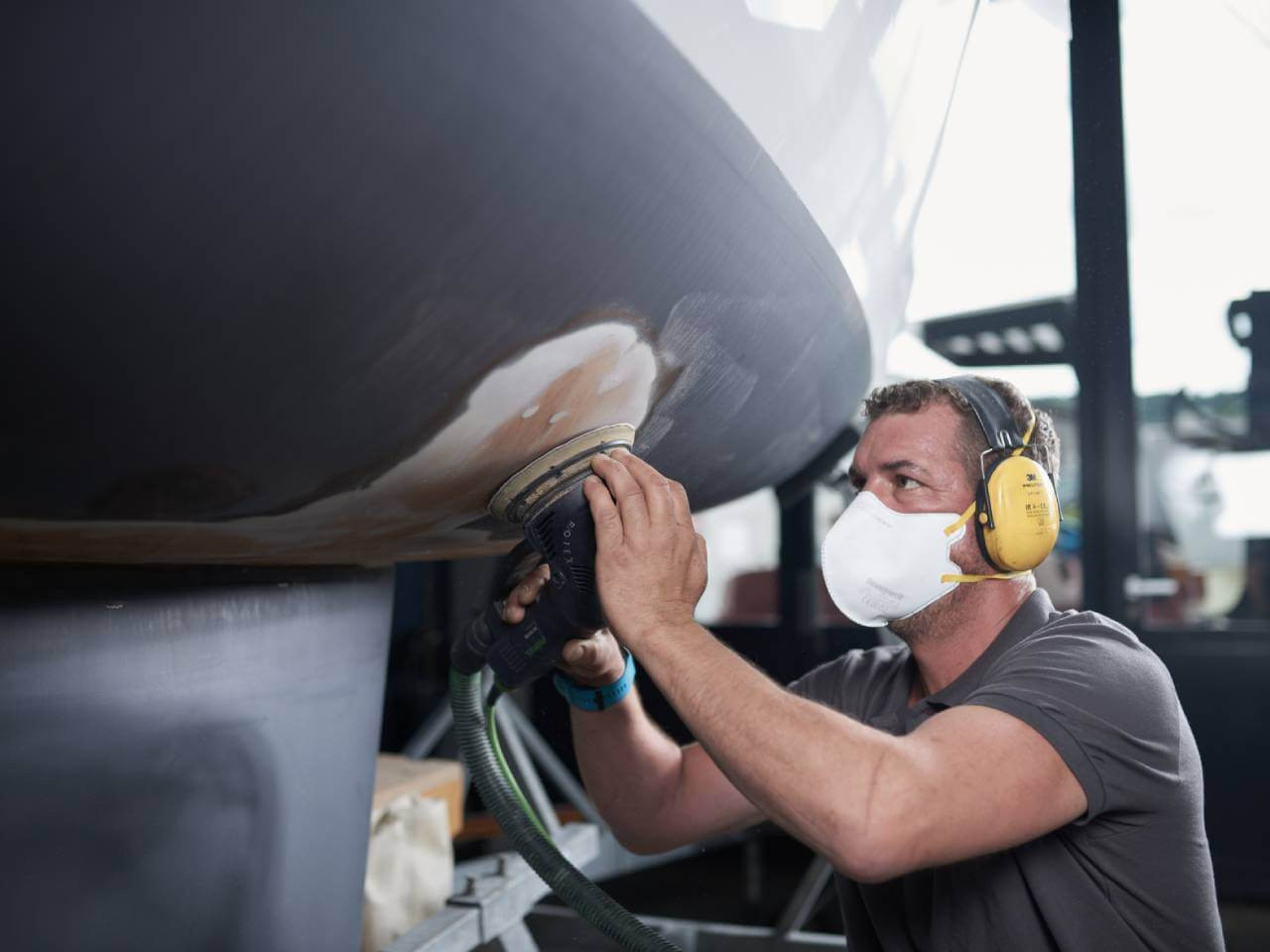
| 4. Cleaning, sanding and repair | De-waxing, degreasing, sanding scope, crack and chip repairs, fairing and repeated blocking | A glossy topcoat cannot make a loose or unfair surface sound |
| 5. Coating system | Full product names and the purpose of substrate primer, high-build or finish primer, and topcoat; planned coats | A brand name alone does not prove system compatibility |
| 6. Method and environment | Spray or roller, enclosure, extraction, dust control, environmental records and overspray containment | Dust, condensation, overspray and solvent control affect the result and safety |
| 7. Colour approval | Colour code, gloss, stripes, a physical sample or spray-out panel, and owner sign-off | A screen image is not a reliable colour sample; dark colours also reveal fairing defects |
| 8. Handover evidence | Progress photographs, product batches, application dates, defect correction, refitting and care instructions | Future repairs depend on knowing exactly what was applied |
First decision: retain the old paint, remove local failures, or rebuild a larger area
If the existing coating is well adhered, a job may centre on cleaning, sanding, local repair and a compatible primer and topcoat. If it is delaminating, blistering or cracking across a broad area, or corrosion is present on aluminium or steel, the quotation should define the removal limit and substrate treatment. “Remove more is always better” is not a universal rule, but neither is covering a failed layer with fresh topcoat.
Substrate changes the process. International publishes different cleaning, abrasion or blasting recommendations for fibreglass, aluminium and steel. Aluminium and steel also require suitable primer protection promptly after preparation, in accordance with the selected system. A quote that says only “sand the whole yacht” does not explain what layer will remain, how adhesion will be checked, or how exposed substrate will be protected.
Second decision: the finish is part of a compatible system
A full repaint normally starts with cleaning and surface preparation, then adds substrate primer, fairing compound, high-build or finish primer and the specified topcoat as required. The actual number of coats, film thickness, reducer, overcoating interval and abrasive grade must follow the latest data for the chosen products. Figures from one product must not be applied to every yacht coating.
Repairability also matters. Awlcraft 2000, for example, is described by its maker as a two-component finish that can be buffed and repaired. Other hard finishes can have different limits on cleaning, polishing and spot repair. Ask the yard for the complete product names and why the system suits the yacht’s substrate, colour, location and intended maintenance.
Third decision: the painting environment becomes part of the finish
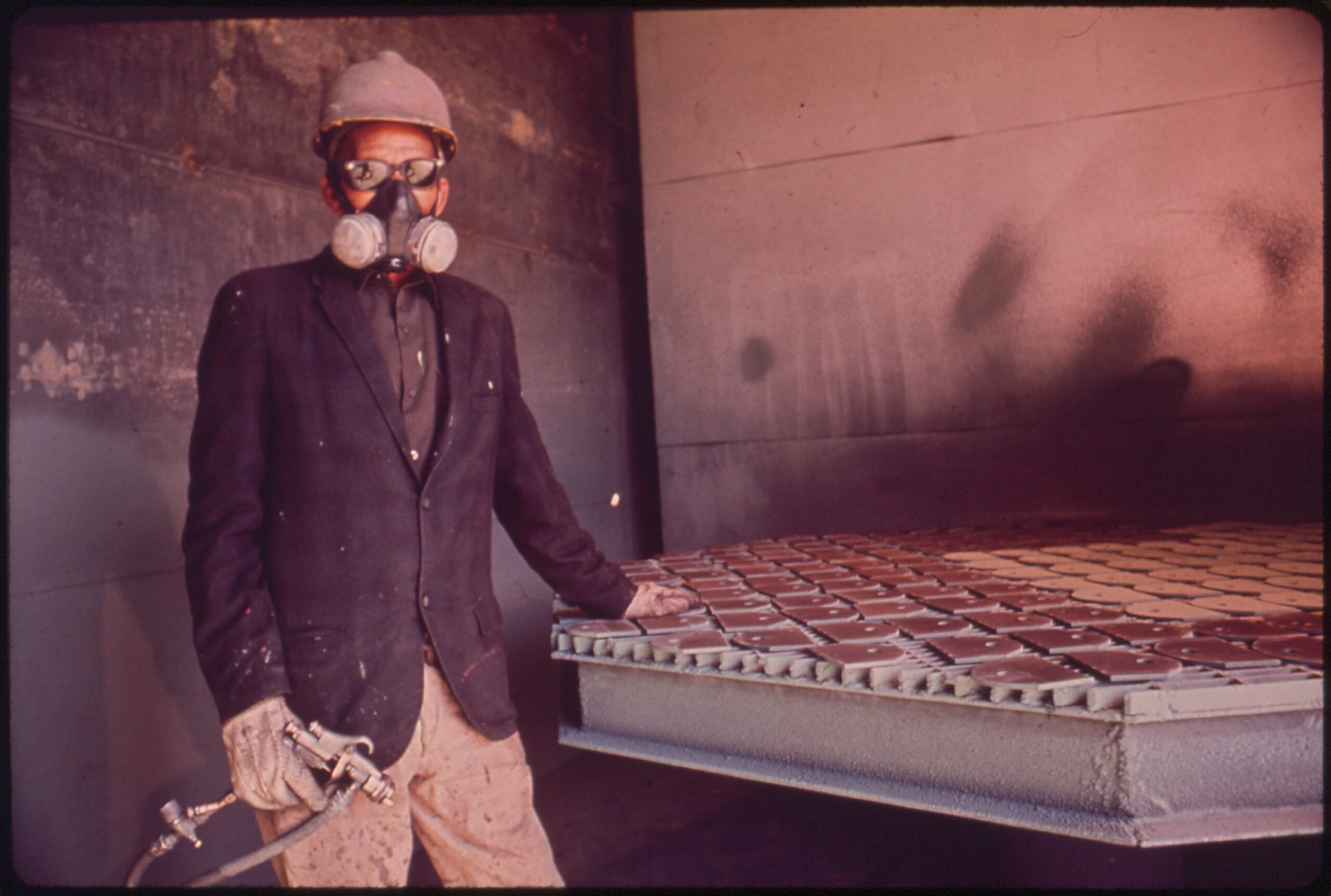
A high-gloss surface reveals dust, orange peel, runs, pinholes and sanding marks. ALEXSEAL recommends good airflow so solvents can leave the film and overspray can be removed, together with records of mixing ratios, application method and environmental conditions. The quotation should state whether the yacht will be painted in a permanent or temporary enclosure, how dust and overspray will be controlled, and how rain, humidity or condensation will affect the programme.
Ask these five questions when comparing quotations
- Do the quotations cover the same painted area and the same fittings?
- How is extra removal or repair authorised? The yard should photograph the location and agree the added scope before proceeding.
- What is the complete product system? “Imported paint” or a brand alone is not enough.
- Are the enclosure, extraction, dust control, masking and waste controls equivalent?
- What handover evidence will the owner receive? Ask for the spray-out, progress photographs, products and batches, completion dates, repair notes and maintenance method.
How should the owner inspect the completed work?
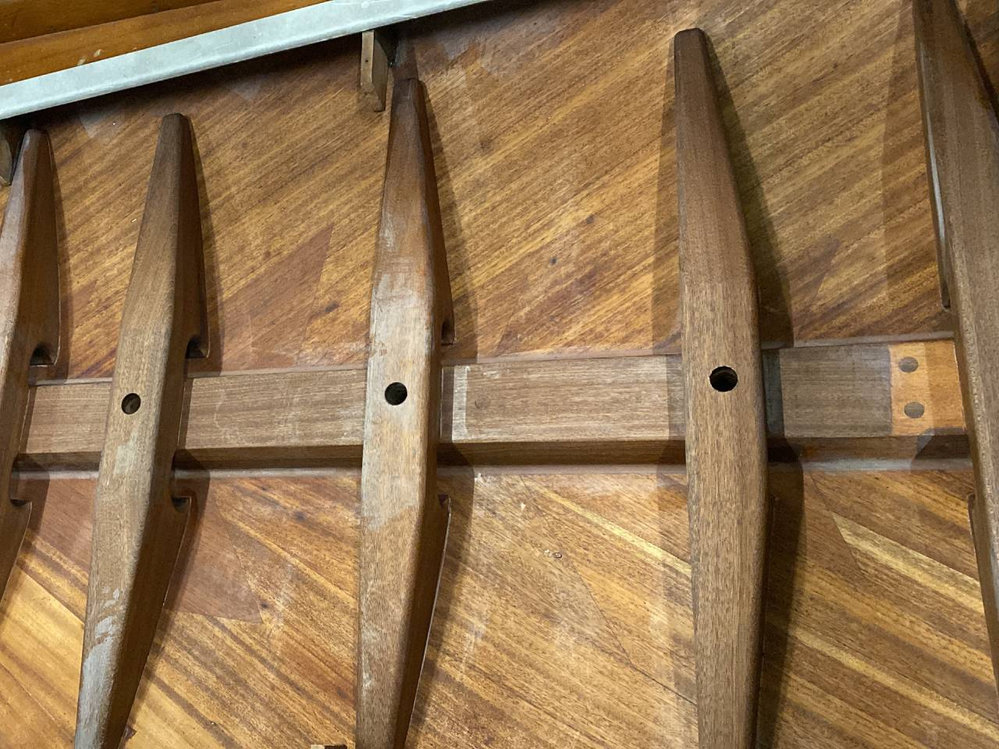
Under even daylight or stable workshop lighting, sight along the surface from bow to stern for colour variation, haze, runs, orange peel, pinholes, sanding marks and masking edges. Check that removed rails, frames, seals, lettering and fittings have been reinstalled, and that drains and moving parts have not been painted shut. Small dust inclusions may be correctable within the specified system, but one polishing method must not be assumed suitable for every topcoat.
The handover record should include the colour code, complete products, batches, application and completion dates, care limits and any remaining touch-up paint. These details are far more useful for a future repair than the statement “it was painted with Brand X”.
VOY Yachting can help owners define the repaint scope, compare yard quotations, coordinate progress and inspect handover for work in Hong Kong or Mainland China. The yard must still confirm the substrate preparation and coating system from an on-site inspection and the current manufacturer data. Contact VOY Yachting.