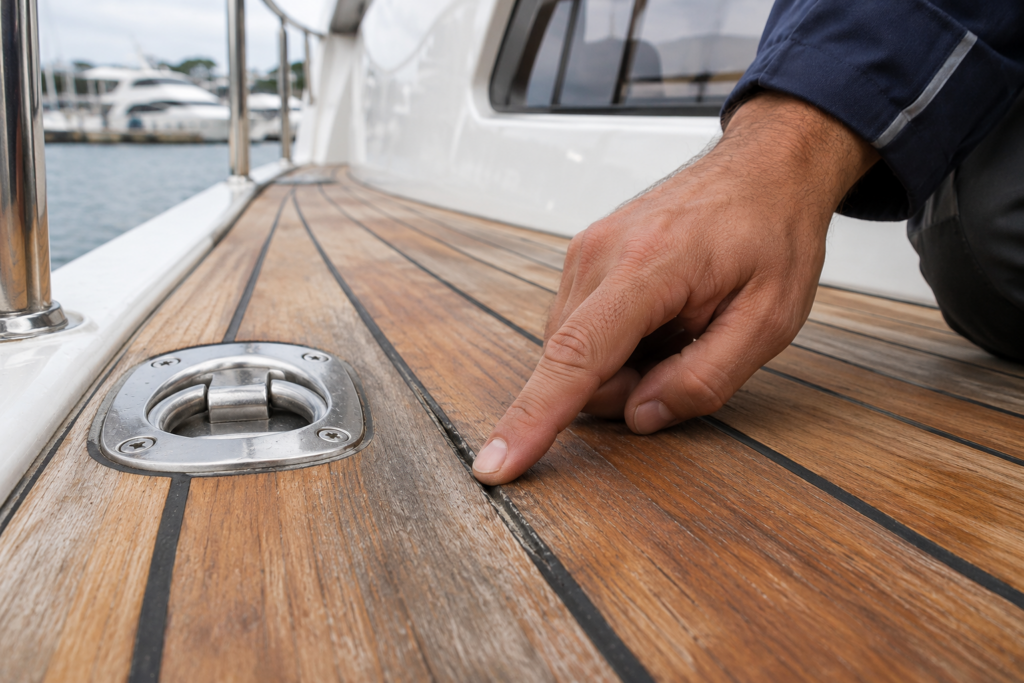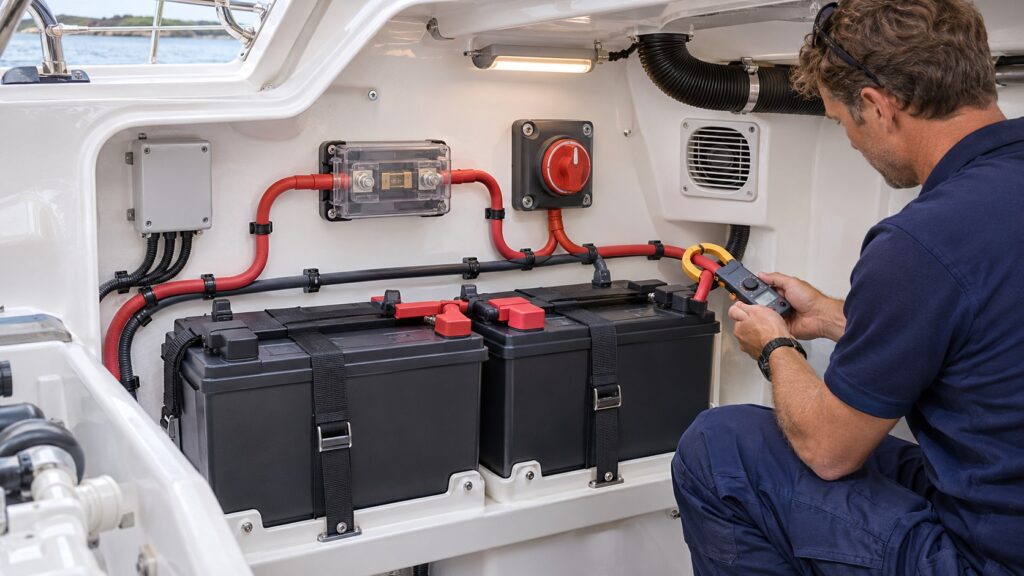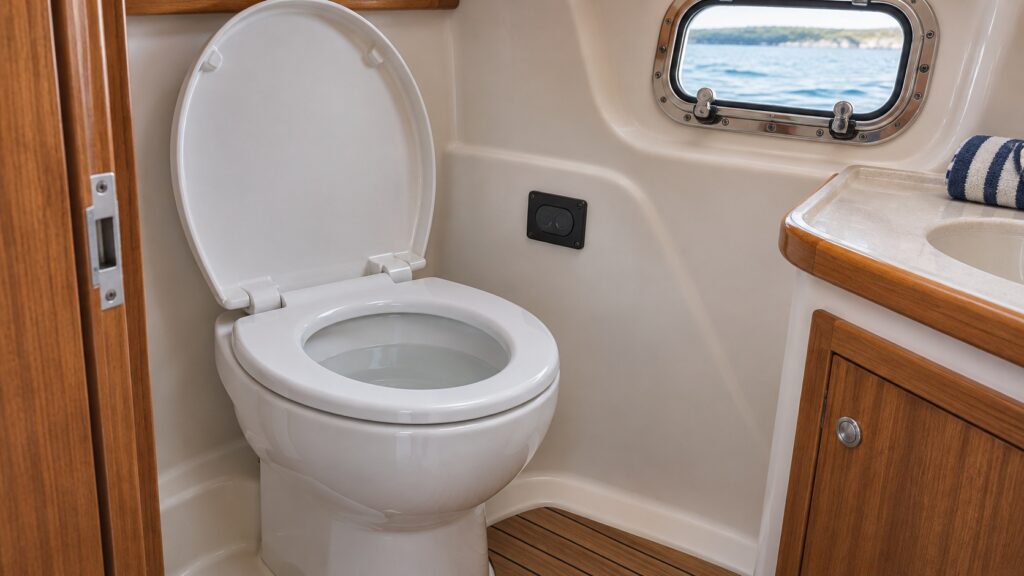

Away from the marina, using a laptop, television or another household appliance does not always require starting the generator. With suitable batteries and an inverter, selected AC appliances can run from stored battery energy. Before comparing wattage, decide what you want to use, for how long, and whether the existing batteries can support it.
Real product examples: inverter versus inverter/charger
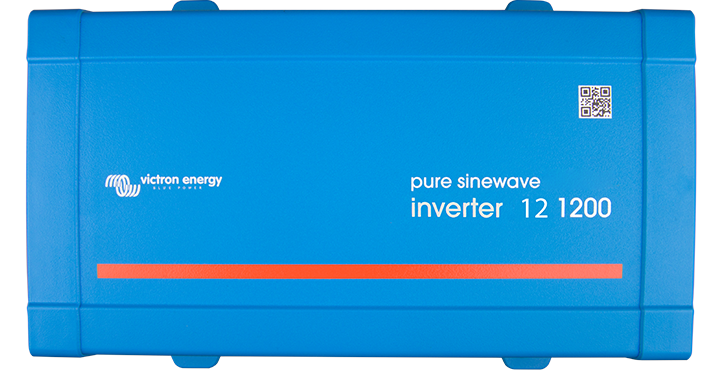
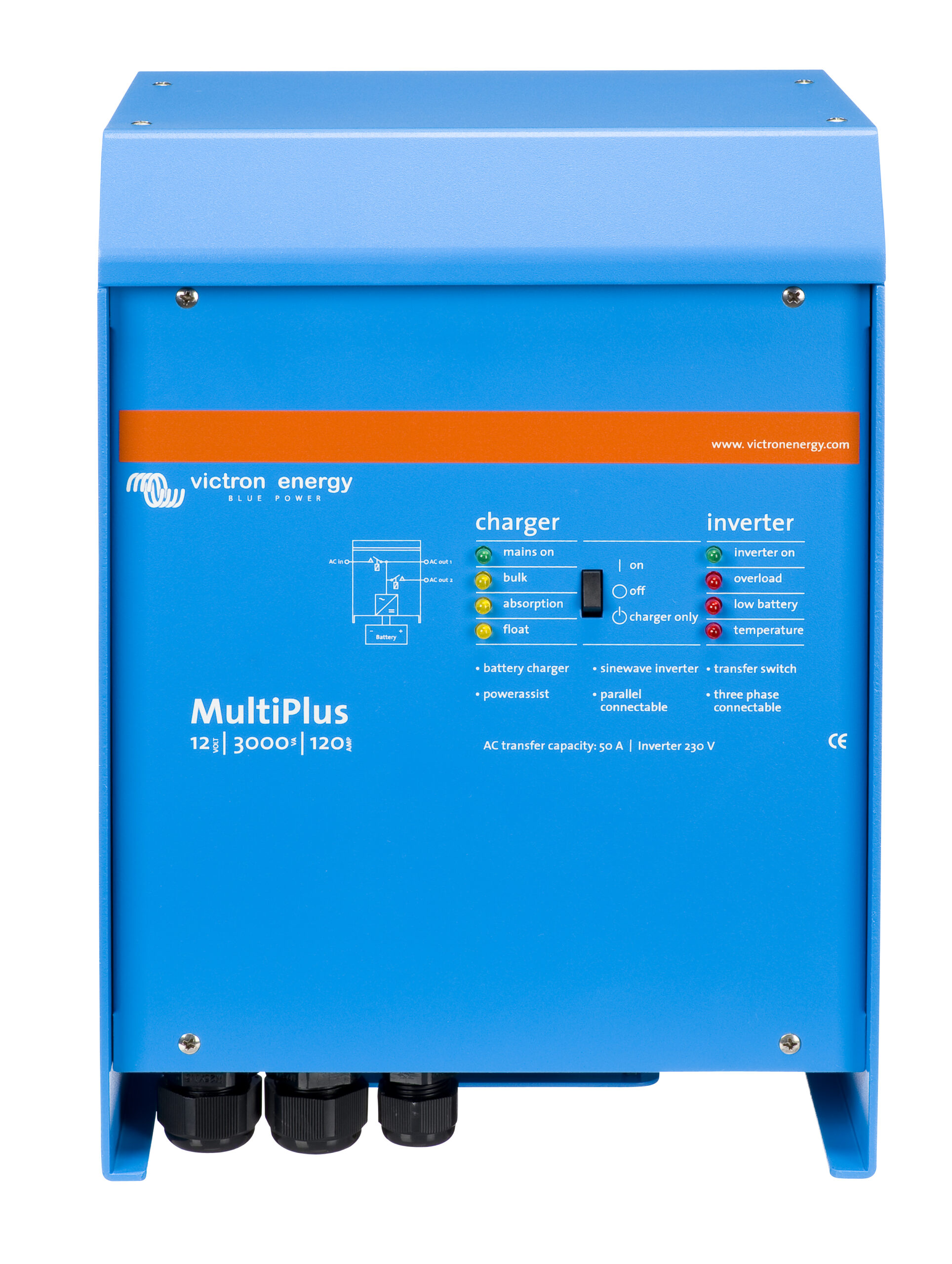
Two energy directions, two jobs
Examples are grounded in the linked manufacturer pages; they illustrate categories, not a VOY specification or a Hong Kong sales ranking.
What is an inverter?
An inverter converts direct current, or DC, from a battery into alternating current, or AC, for appliances. Think of it as a conversion station: the battery stores energy, the inverter changes the form of supply, and the appliance consumes that energy. The inverter does not create extra energy.[1]
A yacht’s service batteries might form a 12, 24 or 48-volt DC system, while appliances require a particular AC voltage and frequency. The selected model must match both sides. Operating in Hong Kong does not prove that every appliance and socket on an existing yacht uses the same supply.[1][2]
Inverter, charger or generator?
| Equipment | Main role | Owner’s takeaway |
|---|---|---|
| Inverter | Converts battery DC into AC | Runtime remains limited by stored energy and consumption |
| Battery charger | Converts a suitable AC supply into charging output | A charger alone does not provide AC from the battery |
| Inverter/charger | Combines conversion and charging; some units integrate transfer functions | Check the actual model’s inputs and switching functions |
| Generator | Uses fuel to generate electricity | A different energy source from a battery-fed inverter |
Some combined units supply AC loads and charge batteries when shore power is connected, then switch to inverter operation when it is removed. Generator compatibility, input arrangements and the circuits included in the transfer design must be specified rather than assumed.[2][3]
List the appliances before choosing the power rating
Record each appliance, its rating and which devices will run together. Brief laptop and television use is a different requirement from running a kettle, microwave and air conditioning simultaneously. That list is more useful than starting with the largest unit available.
Continuous power describes sustained output; peak power describes short-duration capability. A refrigerator, pump or other motor-driven appliance may need more power when starting, so the duration of the surge capability matters too. A rating in volt-amperes (VA) cannot automatically be treated as the same number of watts (W).[2]
The installation environment matters. High temperature or inadequate ventilation can restrict usable output. Compare the conditions in the manual as well as the headline rating.[4]
Power capacity and runtime are different questions
Imagine the inverter’s power capacity as a tap’s delivery rate and usable battery energy as the water in a tank. A larger tap does not enlarge the tank. A bigger inverter therefore does not automatically extend operating time.
For illustration, 1,000 watt-hours (Wh) of usable battery energy supplying a steady 200-watt load gives an ideal five hours before losses. Actual operation must allow for conversion losses, other loads and protective reserves. This is an illustrative energy calculation, not a runtime promise. Appliances that cycle on and off need a different consumption estimate.[5]
Check the socket and control panel too
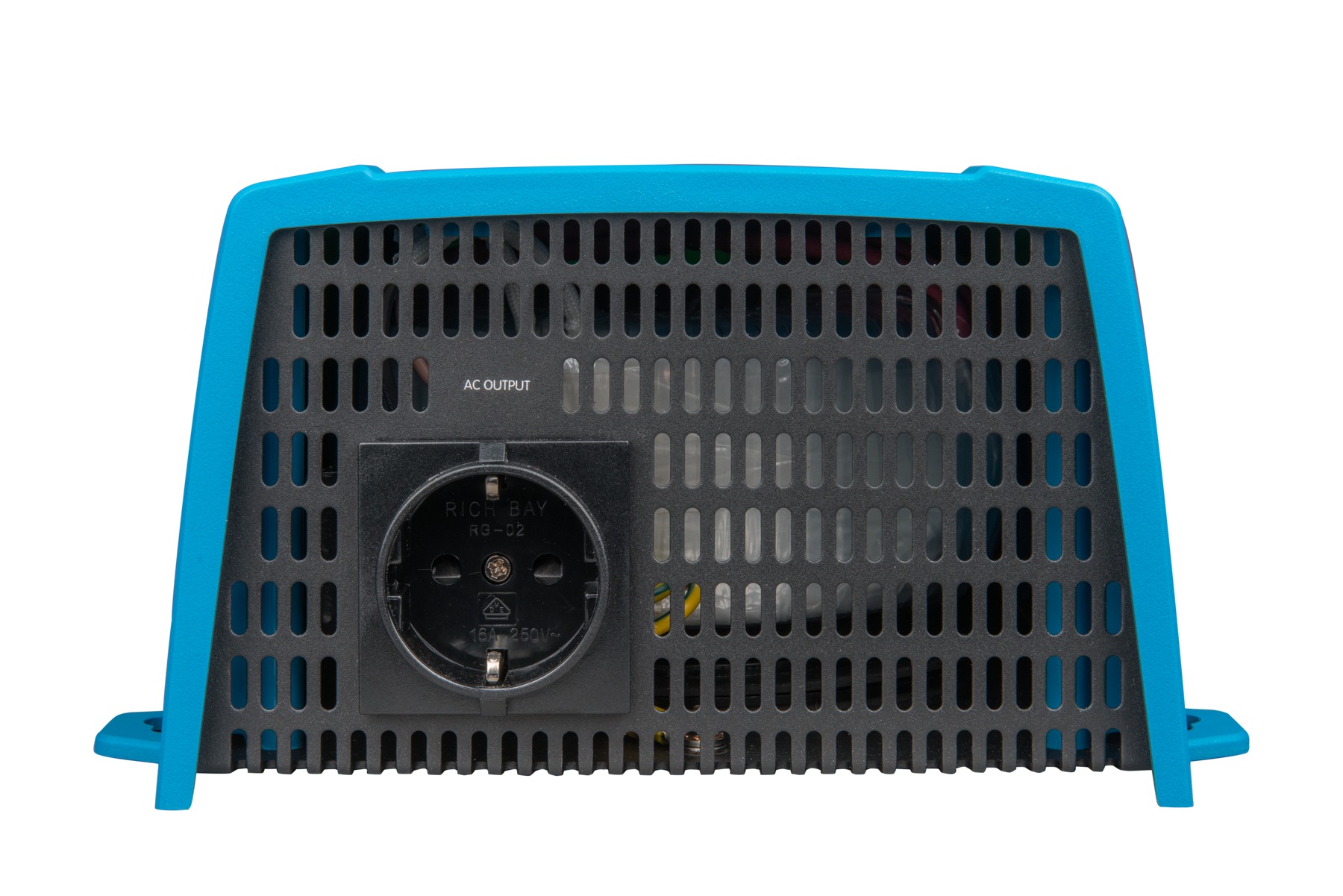
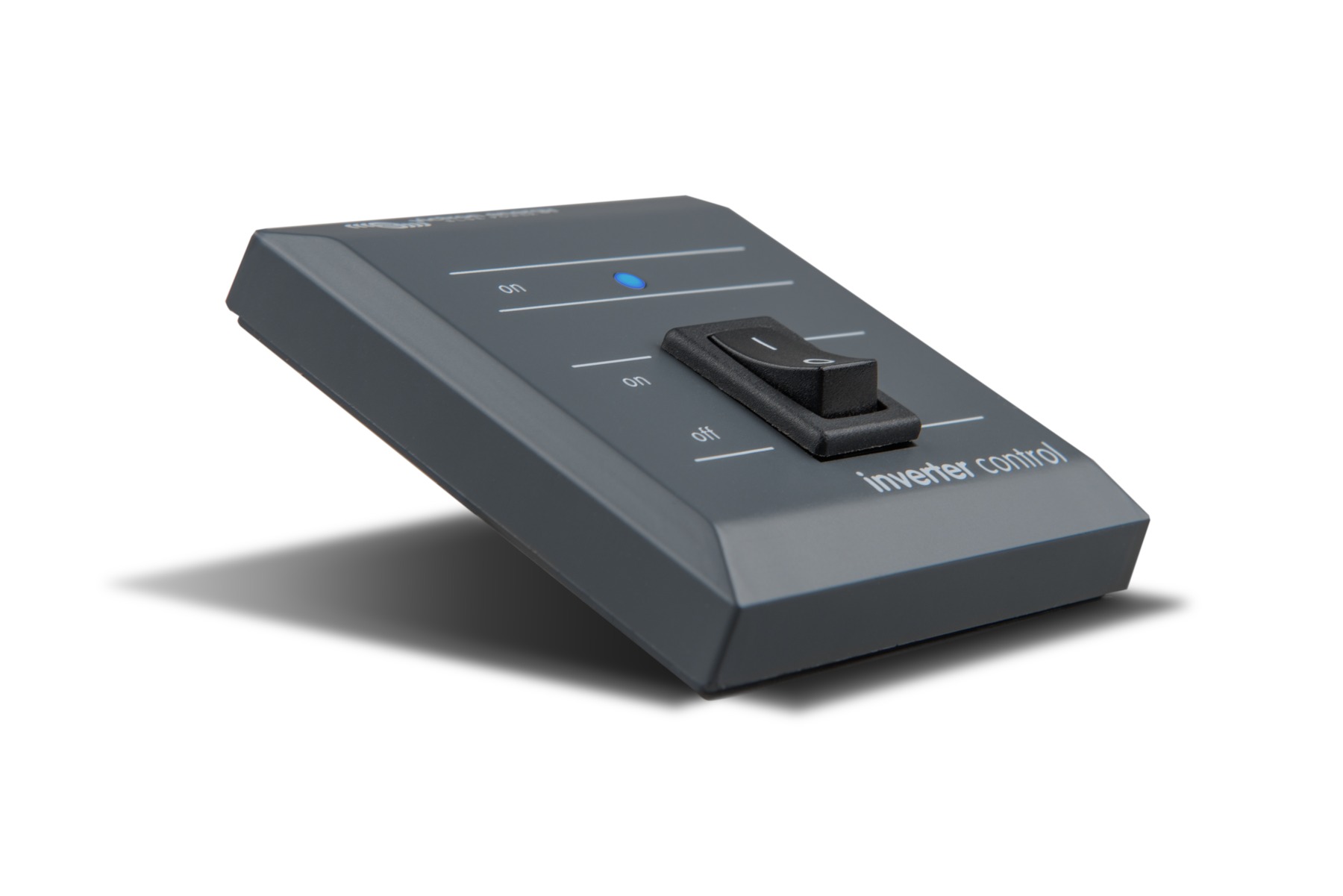
The pictured socket is a regional variant. Check the boat’s voltage, socket standard and control arrangement. A remote panel changes how the inverter is operated, not its available power.
What should a quotation compare?
- Supply compatibility: battery voltage and the appliances’ required AC voltage and frequency.
- Load capability: simultaneous continuous demand, starting peaks and their duration.
- Output waveform: whether the unit provides pure sine-wave output and meets appliance requirements. Waveform is part of supply quality.[3]
- Battery support: usable energy, available current, charging arrangements and protection of starting-battery reserves.
- Installation and support: ventilation, isolation, cabling, protective devices, grounding and transfer arrangements for shore or generator power.[4]
Which loads need more than a wattage comparison?
Air conditioning, cooking equipment and other large loads may require both starting capability and substantial energy over time. A larger inverter label does not establish that the whole system is adequate. A few electronics may need a much smaller arrangement. Design around actual use instead of applying one configuration to every yacht.[2][5]
Photograph the battery details, existing equipment and appliance nameplates, then list expected operating times for a marine electrical professional to assess. AC transfer, grounding and protection require proper design; do not improvise by feeding inverter output back through an onboard socket.[4]
For an onboard power upgrade, share the load list and existing equipment details with VOY to organise inspection and modification requirements. A useful proposal should explain both what the system can operate and how long it can do so.
Sources
- Victron — Inverter VE.Direct
- Victron — Choosing an inverter/charger
- Victron — MultiPlus 2000VA functions
- Victron — Inverter VE.Direct 230V HW15 manual
- Victron — Small boat energy storage and conversion
Checked 2 November 2026. Product functions depend on the specified model and manual; foreign rules are not Hong Kong requirements.