
A yacht sits in a bay through the day. Its solar panels are generating and the fridge keeps running. By afternoon, the charging current has fallen—yet the system may be working normally.
Boat solar panels charge batteries through a controller that regulates voltage and current, supports onboard DC loads and follows the battery’s charging requirements. The panels, controller and battery do different jobs; the controller neither stores energy nor creates extra power.[5]
To understand why, follow the energy: what the panels can provide, how the controller converts it, and what the battery can accept at that moment.
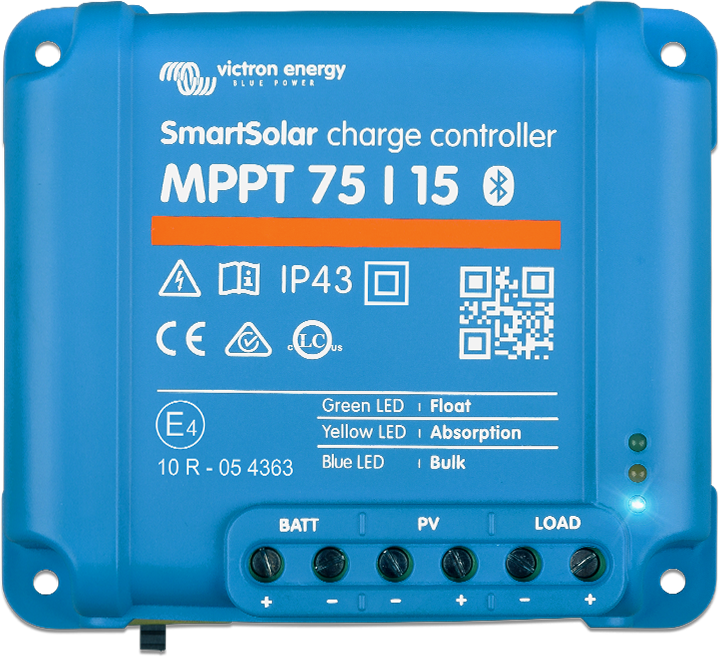
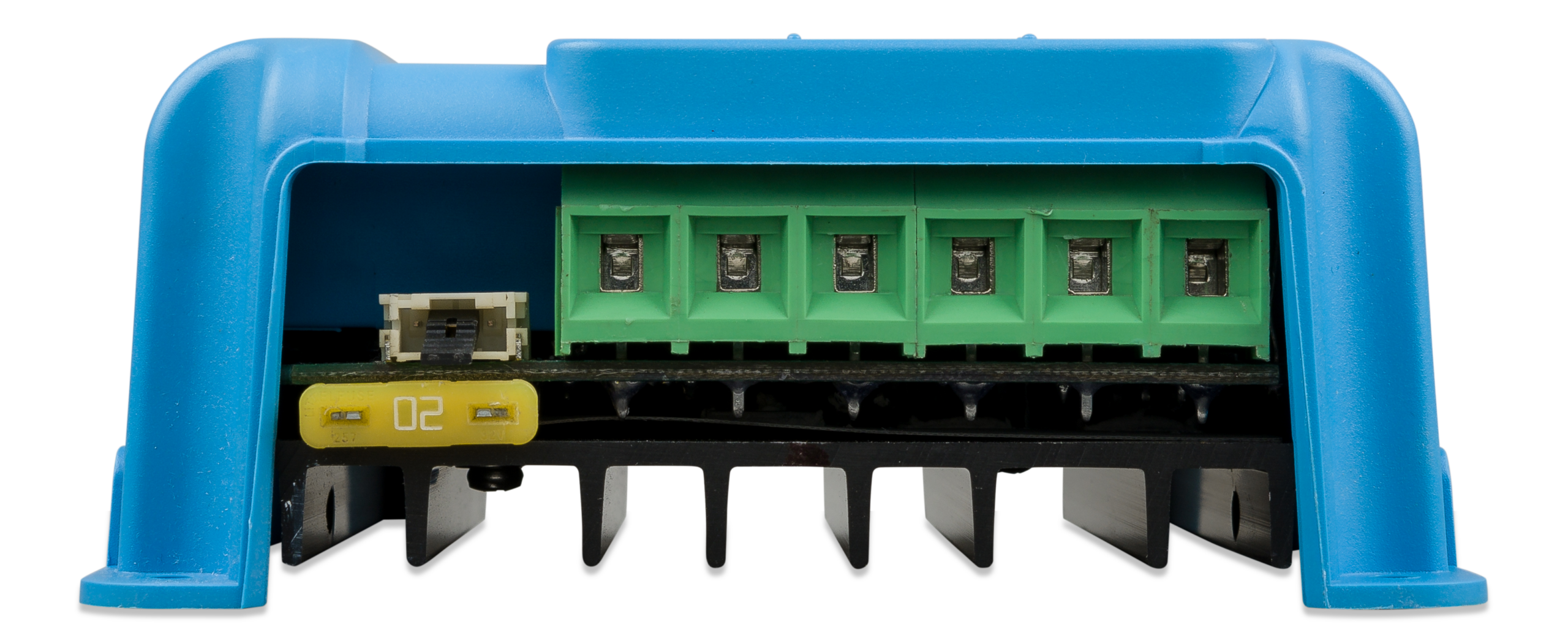
Controller examples: enclosure and connection layout
| Comparison | PWM | MPPT |
|---|---|---|
| Panel operation | Normally pulled toward battery voltage | Tracks a productive power operating point |
| Conversion | Do not apply MPPT conversion behaviour to PWM | Can convert input voltage and current, with losses |
| Reading output | Consider sunlight, battery state and loads | Consider the same conditions; amperes alone do not measure energy gain |
Solar output is not net battery charging
A solar panel is not a constant power source
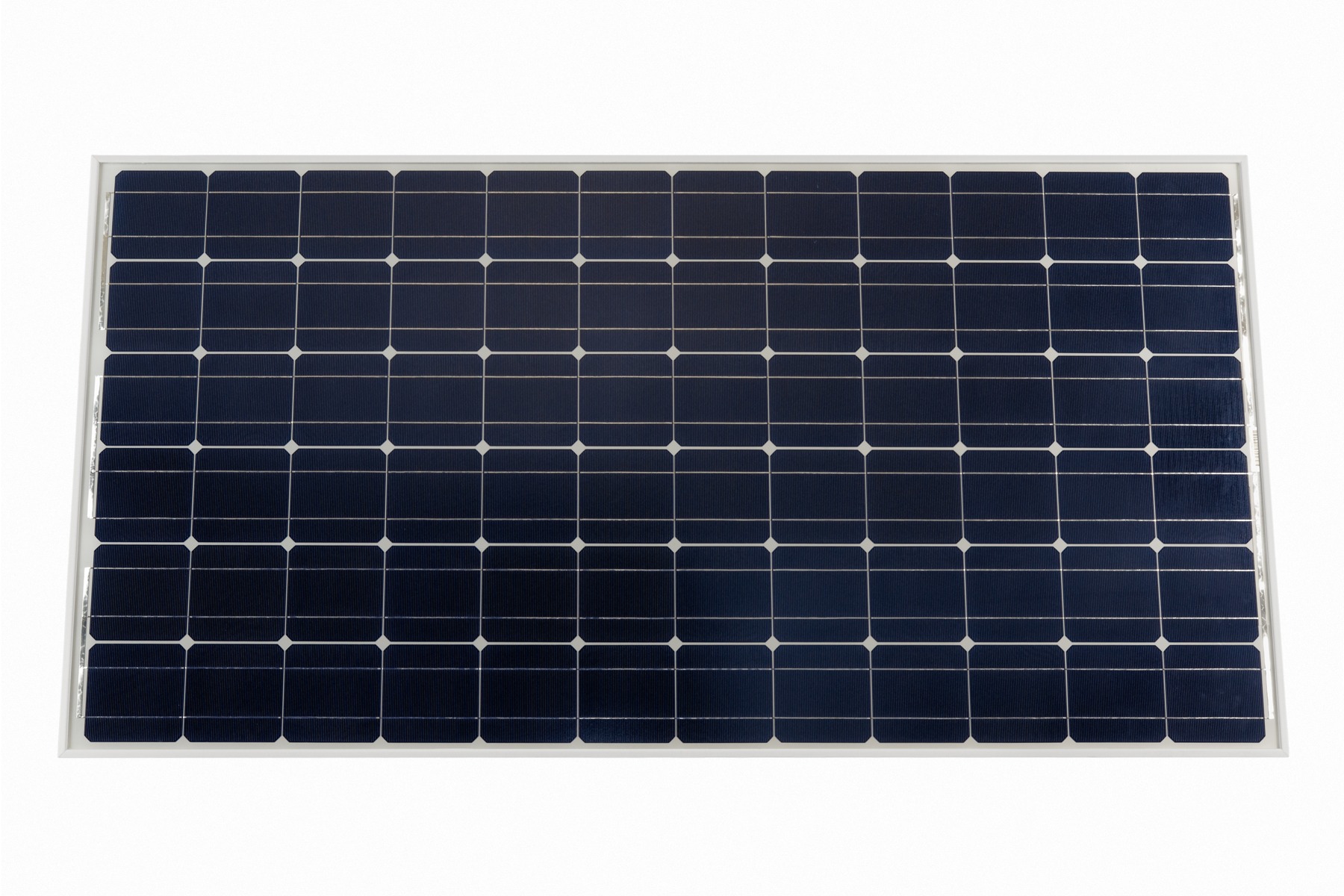
Panels turn light into electrical energy, but sunlight, shade and temperature affect their output. Even in similar light, different operating voltages produce different current and power. A nameplate wattage is not a promise of that output all day.[1][3]
A solar charge controller regulates the energy transfer between the panels and battery-charging system. It does not store energy—the battery does. Nor is it the inverter that converts DC into AC for household appliances.
Generation and storage belong to different components
The controller finds an operating point while managing charging
A controller with Maximum Power Point Tracking (MPPT) adjusts the panels’ electrical operating point to find a productive voltage-and-current combination. Think of choosing a suitable bicycle gear: it helps use the available effort, rather than creating extra effort.[1]
It can also convert a higher panel voltage to the voltage needed for battery charging, with a corresponding change in current. Panel current and battery-side charging current need not match. Comparing amperes alone does not show an energy gain: conversion has losses, and equipment limits still apply.[1]
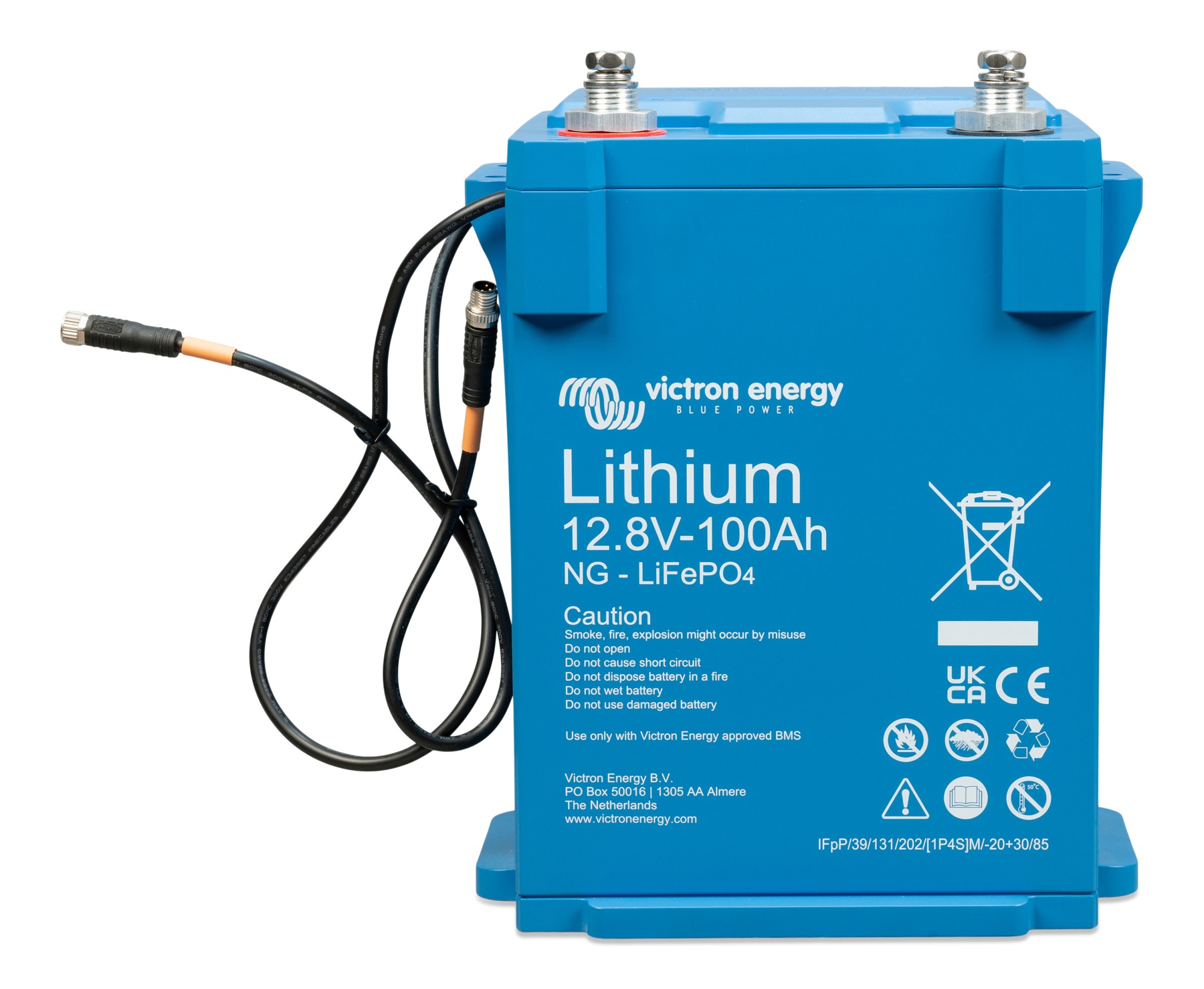
What the panels can supply and what the battery can accept are separate conditions. The controller must respect the battery’s charging requirements, rather than force maximum power into it indefinitely. Charging current can therefore fall in bright sunshine.[2][4]
A Pulse Width Modulation (PWM) controller instead regulates charging by rapidly switching the connection on and off, pulling panel operating voltage towards battery voltage. It does not independently track the maximum power point in the same way. The MPPT conversion behaviour described above therefore does not apply to every controller.[1]
How much light energy can become electrical power now?
How can panel output be used within battery-charging conditions?
Is power being consumed, or is there a surplus to store?
Back in the bay: why does charging slow in the afternoon?
An incompletely charged battery may accept more current in the morning. As it approaches full charge, current may need to reduce. In the reference manual’s three-stage example, absorption holds a set voltage while current gradually falls, followed by float maintenance. That can be normal charge regulation, rather than a loss of generating capability.[2]
This example is not a universal programme for every battery. Lithium and different lead-acid batteries require their manufacturers’ charging instructions and, where applicable, battery-management control. Do not change settings simply to raise a displayed number.[4]
Meanwhile, the fridge keeps using energy. On a shared DC system, solar output also supports current loads; the surplus becomes net battery charging. If consumption exceeds solar supply, the battery still discharges. Controller output and an increasing battery charge level are different observations.[3]
Which onboard routines make use of solar charging?
Start with where the boat stays, its daytime exposure and daily energy use, rather than its length alone. These scenarios are energy-balance considerations, not performance guarantees for particular boat types.[6]
Boats that spend nights away from shore power
A fridge, lighting and small electronics draw from the service bank. With sufficient daytime exposure, solar can replace part of that consumption. The contribution depends on actual generation and demand. At night, stored energy or another source is still needed.
Boats with a hardtop or useful panel area
Space helps accommodate panels, but shade matters too. A sailing yacht’s mast, rigging and other equipment can change exposure through the day. The useful measure is area that receives effective sunlight over time, rather than how many panels appear to fit.
Boats returning daily to shore power, or running large loads
If little service-battery energy is used, solar may be a lower priority. Running air conditioning for long periods requires a separate assessment of generation, storage and demand. A different controller cannot create energy missing from a limited panel area.
Understand the system, rather than chase a high reading
Read daily generation alongside net battery charging or discharge, active loads and shade. Morning charging followed by lower afternoon current may mean the battery is nearly full. Solar output without a rising charge level may mean the fridge and other loads are using it. These are interpretation clues, not diagnoses from one screen.
Arrange technical checks if performance changes markedly in comparable conditions, or warnings, unusual heat or smells appear. Illuminated panels can remain live; do not unplug connectors or open equipment yourself.
A useful solar installation fits the way the boat is used. VOY can help document onboard conditions and energy needs, and coordinate subsequent inspection and maintenance work.
Sources and scope
- PWM and MPPT operation
- features and charging stages
- solar supply, loads and full batteries
- battery-specific charging requirements
- what a charge controller does
- marine energy use and solar charging
Checked 4 November 2026 (Hong Kong time). The Victron features and troubleshooting references cover the products in its SmartSolar MPPT 75/10–100/20 manual. This article explains principles and does not prescribe universal settings for other models. Undated live pages are identified by the check date.