
Antifouling paint does not make a hull permanently immune to marine growth. Conventional biocidal coatings release active ingredients near the painted surface to discourage fouling. Hard and self-polishing paints differ in how the coating releases those ingredients and how much of the paint film is consumed. That distinction explains why a visibly clean bottom is not the only measure of a good cleaning job.
What does antifouling protect?
Antifouling controls growth on underwater surfaces. It is a different part of the coating system from a barrier primer or repair material, and it does not repair cracks, leaks or structural damage.
Fouling conditions vary with water temperature, salinity, flow, sunlight and the berth itself. The same coating can therefore perform differently under different operating conditions. Colour alone does not identify its performance. Hempel’s paint manual includes mooring conditions and sailing patterns among the factors to consider.
Hard paint: a remaining film does not prove remaining protection
Hard antifouling has a comparatively abrasion-resistant resin matrix. Active ingredients gradually leach out into the water close to its surface. A visible film can remain after its active content and protection have changed. Repeated recoating can also leave a build-up of old material.
This type is used where a more abrasion-resistant surface is appropriate. However, “hard” is a category, not permission to scrub every product aggressively. Cleaning must follow the particular coating’s instructions. Manufacturer’s explanation
Self-polishing paint: renewing the surface is not automatic cleaning
Self-polishing antifouling progressively consumes its surface in a controlled way to expose fresh active coating. Self-polishing copolymer (SPC) is one category; other products may use mechanisms such as ion exchange. “Self-polishing” describes that renewal mechanism. It does not mean automatic mirror polishing or a guarantee of zero growth during long idle periods.
SPC belongs within the broader discussion of eroding coatings, but not every product sold as soft or ablative has the same chemistry or performance. Because the film is consumed, unnecessary aggressive cleaning can remove useful coating as well as fouling. How the types differ
Two coating-film concepts
| Comparison | Hard | Self-polishing |
|---|---|---|
| Surface renewal | Active ingredients leach; more resin matrix remains | Controlled surface consumption exposes fresh coating |
| Cleaning concern | Avoid unnecessary abrasion | Avoid removing useful paint film |
| Before recoating | Check build-up, condition and compatibility | Check remaining film, underlying condition and compatibility |
This is a general mechanism comparison, not a product-specific application or cleaning instruction. Biocide-free systems may work differently.
What do “hard” and “soft” actually feel like?
The distinction concerns the film after application and during service, rather than how thick the liquid feels in the tin. Hard antifouling has a relatively abrasion-resistant matrix, more of which remains on the hull. Self-polishing paint progressively consumes and renews its surface. It is sometimes loosely called “soft paint”, but this does not mean it stays paste-like.
Either type can have a smooth surface, and hard paint need not be glossy. Colour, sheen, touching or scraping are unreliable ways to identify the coating. Use the application record and full product name, then check the manufacturer’s classification. An immersed film may also behave differently from a freshly dried one.
Brands and models: which are hard and which are self-polishing?
These yacht-coating examples from International, Hempel and Jotun help owners read quotations and ask suppliers useful questions. This is a product-type guide, not a Hong Kong sales ranking or stock list. One brand can offer several coating types, and region, product code and colour can affect suitability.
| Brand / model | Film and buying considerations |
|---|---|
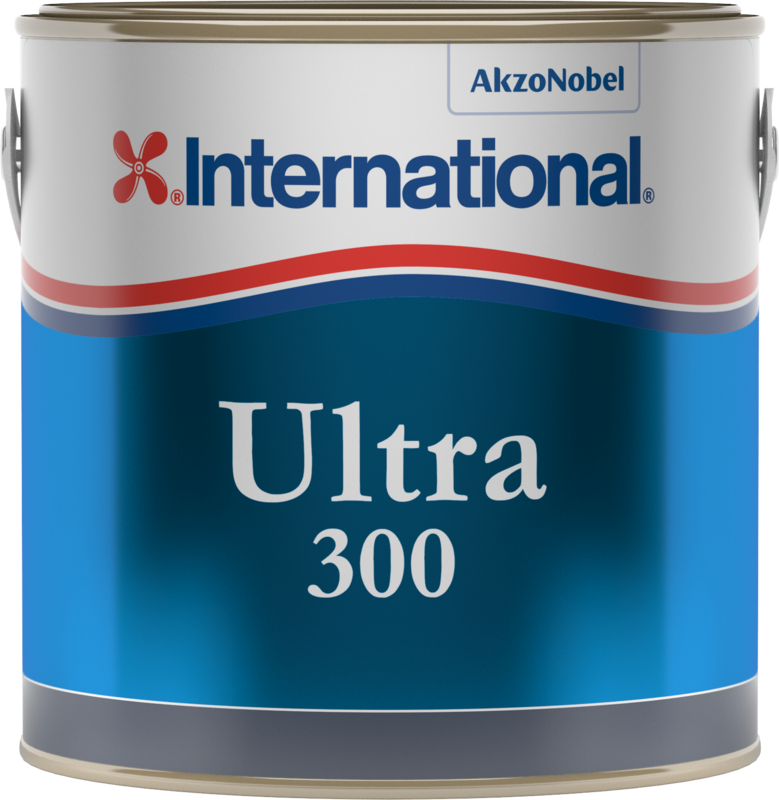
| International Ultra 300 | Classified as hard antifouling. The manufacturer allows scrubbing and burnishing within its guidance. An example for owners considering a more abrasion-resistant film, rather than permission for unrestricted aggressive cleaning. |
| International VC Offshore EU | A hard coating with a smooth, burnishable finish; an example for racing or fast-boat owners who prioritise hull-surface preparation. The EU suffix is part of the product identity. |
| Hempel Hard Racing TecCel 7679A | A hard film with high mechanical strength. Manufacturer-listed uses include power boats and regatta yachts. Check the 7679A code as well as the Hard Racing name. |
| Jotun Racing | A hard-matrix product that can be burnished. The manufacturer includes trailer boats and dry moorings among its uses, alongside high-speed and racing applications. Confirm the complete coating system. |
| Brand / model | Film and buying considerations |
|---|---|
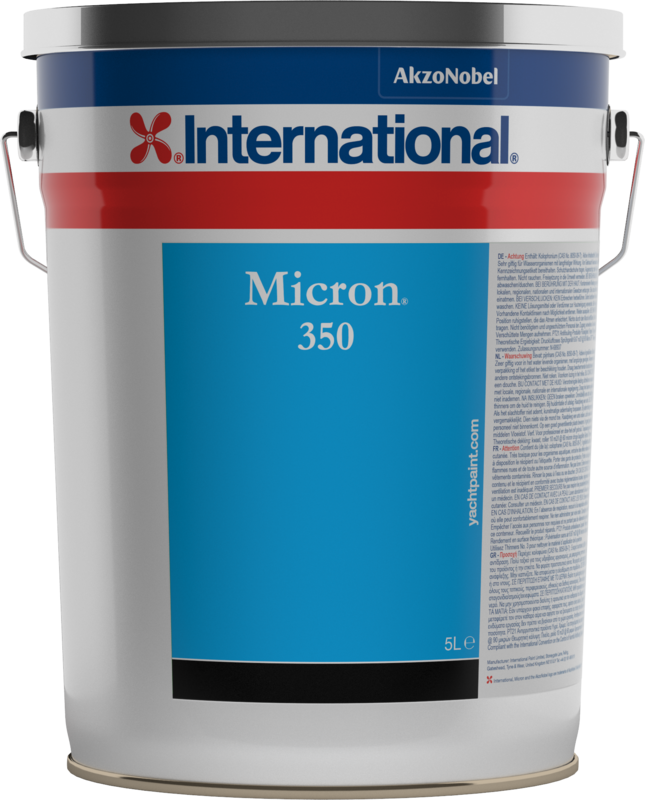
| International Micron 350 | Explicitly classified as self-polishing copolymer (SPC) antifouling. Controlled polishing renews the surface, making it a concrete example of the SPC category. |
| Hempel Mille NCT 71880 | Classified as self-polishing, using Hempel’s patented binder technology. The category does not establish identical chemistry to Micron 350. This product is unsuitable for aluminium or other light alloys. |
| Jotun NonStop II | Uses ion-exchange self-polishing to progressively renew its surface. It illustrates why owners should check the full data sheet rather than treating every “soft” or self-polishing product as the same technology. |
Manufacturer information checked on 5 November 2026. Examples span different regional versions. The linked Micron 350 data-sheet filename is dated 2021-10-08 and supports its classification only; obtain the current local data sheet for application decisions.
Aluminium hulls require more than a hard-versus-self-polishing choice. For example, the October 2026 Hard Racing TecCel 7679A data sheet permits only white on suitably primed aluminium; other shades are excluded. Jotun Racing recommends only white and grey on aluminium within an approved system. This does not mean every white antifouling is aluminium-safe. Outboards, sterndrives and propellers also need products suitable for their particular materials and components.
Four things to establish before buying or comparing quotations
- Hull material and existing coating: bring the previous work record or a tin-label photograph showing the full brand, model and colour. GRP and aluminium require different checks. Ask the yard to assess an unidentified old coating and its compatibility.
- How the boat is used: is it kept afloat, cruised, raced, driven fast or frequently trailered ashore? Compare appropriate hard products where abrasion resistance or burnishing matters. Compare self-polishing products where controlled surface renewal and reduced old-film build-up are priorities. These are starting points, rather than fixed rules.
- Berth and cleaning arrangements: describe the water, idle periods, previous fouling and cleaning method. Self-polishing does not remove the need to manage an idle hull; hard paint does not guarantee tolerance of frequent aggressive scrubbing.
- The complete coating system: confirm the locally supplied version, primer or tie coat, compatibility and recoating requirements. Compare surface preparation and application scope alongside the price per tin.
A useful supplier question is: “This is my hull material, previous coating and use pattern. Is this product hard or self-polishing, compatible with the old paint, and appropriate for my berth and cleaning method?” That is more useful than choosing on brand name alone.
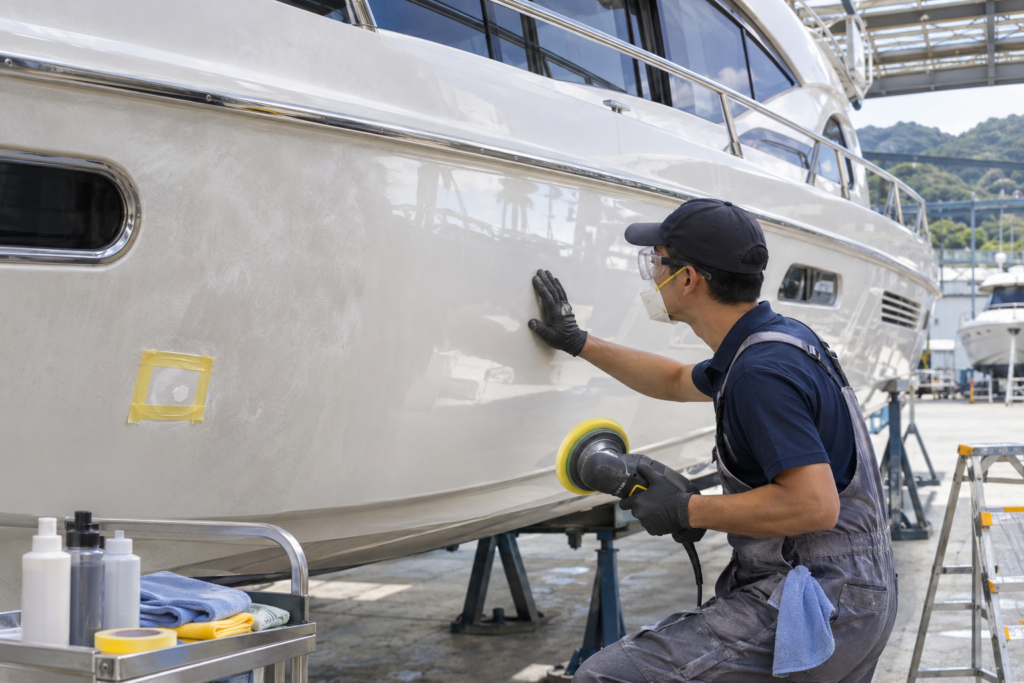
Before cleaning, identify the coating
International’s cleaning guidance warns that even hard antifouling can be softer when immersed, and excessive scrubbing can remove sound paint. “Clean-looking” and “useful coating preserved” are therefore separate outcomes.
Find the brand, full product name, application date and previous work record before arranging cleaning. Ask the contractor to choose a method appropriate to that product. Also confirm the site’s arrangements for removed growth, paint debris and wash water. Overseas practices should not be assumed to be universally permitted in Hong Kong.
Questions owners often need to resolve
Why can growth appear on a painted bottom?
Performance depends on the product, application and operating conditions. Growth alone does not establish a brand failure; the remaining film and maintenance record need to be checked together.
Does coloured water during cleaning prove the paint has failed?
No. Abrasion can remove material from an eroding coating, but that does not prove the cleaning pressure is appropriate either. Identify the system rather than judging by the water’s colour.
Can another brand be painted straight over it?
Brand and colour are not enough to decide. Check the old coating’s condition and the current compatibility instructions. Additional preparation or a suitable tie coat may be needed.
Do biocide-free coatings work the same way?
No. Some silicone foul-release systems use a low-adhesion surface to make growth less firmly attached. Their care requirements should not be copied from conventional hard paint. Hempel’s system overview
For bottom-maintenance planning, share the previous coating and work records with VOY. Clarify cleaning, old-coating treatment and recoating scope before comparing quotations.